The academic and journalist Beatriz Bissio speaks with Dimitris Konstantakopoulos
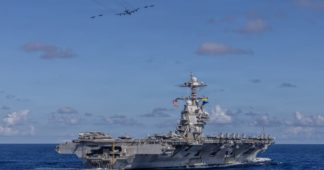
Using claims that are manifestly unfounded and irrational, U.S. President Trump began by bombing and sinking small boats; he then issued threats against Venezuela, Colombia, and Mexico, ordered the seizure of a tanker, and has now concentrated one tenth of the entire U.S. fleet in the Caribbean and imposed a blockade on Venezuela—despite the opposition of an overwhelming majority of U.S. citizens to any new military entanglement of their country, a policy that has already led to the resignation of senior officers of the U.S. Navy.
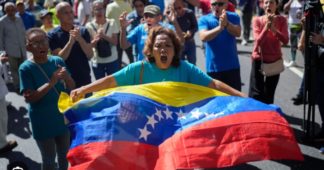
Mr. Trump’s enemy is certainly not drugs (the so-called Cartel de los Soles that he often mentions does not exist today and was fabricated by the DEA and the CIA). His enemies are the left-wing governments of Latin America: Venezuela, Colombia, Nicaragua, Cuba, Mexico, and, in the background, Brazil, which represents the BRICS in South America (governments that also happen to be the fiercest critics of the genocide of the Palestinians by Trump’s “mentor,” Mr. Netanyahu). While some analysts believe that Trump’s immediate motive is control over Venezuela’s oil reserves—so as to make possible a war against Iran without the major side effects that would follow the closure of the Strait of Hormuz (Why a War With Venezuela Means the Big War With Iran is Coming | Defend Democracy Press) — a declared central objective of Trump is, of course, the elimination of any Chinese, Russian, and Iranian influence on the continent.
The “Trumpists” like to present this entire policy as a “retrenchment” to the Western Hemisphere. It could, however, also be the clearing of the “rear areas” (full control of Latin America, Europe, and Western Asia) before a decisive confrontation with Russia and China.
On all these issues, as well as on political developments in Latin America, we speak with Dr. Beatriz Bissio—born in Uruguay and a Brazilian citizen—Associate Professor in the graduate program in Comparative History and Coordinator of the Research Center for Interdisciplinary Studies of Africa, Asia, and South–South Relations at the Federal University of Rio de Janeiro; a member of the Network for the Spirit of Bandung; a member of the advisory board of the European Centre for the Study of Extremism; and a member of the Academic Advisory Board of the Cambridge Centre for Palestinian Studies. Professor Bissio has received three awards for her lifetime work and worked as a journalist for more than 20 years. She founded and for many years directed the magazines Third World, Ecology and Development, and Revista do Mercosur. She has conducted interviews with a range of leading figures and intellectuals of the anti-colonial struggle and of the “Third World,” including Nelson Mandela, Agostinho Neto, Fidel Castro, Seán MacBride, Eduardo Galeano, Maurice Strong, Rigoberta Menchú, Otelo Saraiva de Carvalho, Yasser Arafat, Mahmoud Darwish, Samora Machel, Muammar Gaddafi, Saddam Hussein, Xanana Gusmão, Julius Nyerere, and General Omar Torrijos.