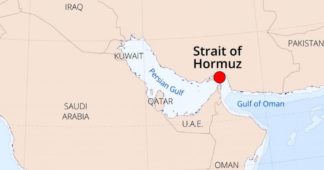
- US President Donald Trump and his national security team are reviewing an Iranian peace plan to halt the war and reopen the Straight of Hormuz – with nuclear talks pushed back to an unspecified future date.
- Iran’s Foreign Minister Abbas Araghchi meets with Russian officials, including President Putin and Foreign Minister Lavrov, in St Petersburg as his hectic diplomacy tour continues.
- German Chancellor Friedrich Merz says the United States is being “humiliated” in its war with Iran warning Washington lacks a clear path out of the conflict as Tehran gains the upper hand.
- Hezbollah chief Naim Qassem called in Lebanon’s government to suspend talks with Israel. In response, President Joseph Aoun accused the group of “treason” for restarting attacks on Israel.
Iran’s VP says country’s steadfastness gave it global influence
Vice President Mohammad Reza Aref says Iran has gained a position of global influence by showing resilience against years of sanctions.
Aref said on X that Western countries are desperately trying to persuade Iran to ease its restrictions on the flow of energy through the Strait of Hormuz and are attempting to dictate their policies to Iran by imposing crippling sanctions on the country.
“They once refused to sell fuel to our aeroplanes to cripple the Iranian nation. Today, those same countries have come to the negotiating table with Iran to sustain their own energy lifelines,” Aref said in his Farsi-language post.
“This is the result of steadfastness; we have moved from a state of ‘vulnerability to sanctions’ to a position of ‘authority in supplying global needs’.”
Israel cancels major holiday gatherings over fears of Hezbollah attack
About 100,000 mostly ultra-Orthodox Jews were expected to gather next week on Mount Meron in northern Israel to celebrate the Lag BaOmer holiday.
However, the office of Prime Minister Benjamin Netanyahu said the large festival will be replaced with a smaller symbolic ceremony, citing concerns about the gathering being attacked by Hezbollah.
Mount Meron is only 6km (4 miles) from the border with Lebanon. People normally light bonfires, dance, and have large meals in honour of Rabbi Shimon Bar Yochai, a 2nd-century sage and mystic who is believed to be buried on the mountain.
Pakistan urges diplomacy, maritime cooperation amid Hormuz crisis
Pakistan’s ambassador to the UN has warned that disruptions to global maritime routes, particularly the closure of the Strait of Hormuz, pose a serious threat to international peace, economic stability and developing nations.
Speaking at the UNSC on maritime security, Asim Iftikhar Ahmad emphasised that safeguarding sea lanes is essential not only for trade but also for broader development and security goals.
“Global maritime spaces are a key geostrategic arena where the challenges of the 21st century intersect. They are the lifeline of global commerce, bellwether of Earth’s environment,” he said, noting that modern economies depend heavily on uninterrupted seaborne trade.
Ahmad pointed to the ongoing disruption in the Strait of Hormuz as a clear example of how maritime instability can cascade into global crises.
“The closure of the Strait of Hormuz and its cascading effects on food and energy security and supply-chain disruption is a case in point,” he said.
Envoys’ lack of familiarity with Iran nuclear file ‘crucial weakness’
Trump’s choice of negotiators tasked with resolving the conflict with Iran has come in for a lot of criticism, with political loyalty, personal trust and outsider instincts given priority over conventional diplomacy.
Key negotiators since last year have been Trump’s son-in-law and adviser Jared Kushner and real estate developer Steve Witkoff, a longtime confidant of the president. The pair have been joined by Vice President JD Vance, who led the highest-level talks with Iran in nearly 50 years earlier this month.
None of these personalities is a career diplomat. Is this a problem?
Former US ambassador Gordon Gray said the trio have two things going for them. “One is the fact that they’ve got the trust of the president, and one is the fact that they have instant access to the president,” he told Al Jazeera. “You don’t have to be a diplomat to negotiate successfully.”
But, Gray added, the lack of familiarity with the nuclear file is a crucial weakness. Former US Secretary of State John Kerry – who helped hammer out the last nuclear deal with Iran that Trump ditched in his first term – was not an expert either, “but he was smart enough and self-aware enough to bring nuclear experts with him to the negotiations”.
Iran’s trust in Witkoff and Kushner is in short supply, given that last year’s negotiations with Iran ended with the 12-day war. Gray noted Trump’s decision to add Vance to the team was “specifically requested by the Iranian side” and “probably a smart move”.
Trump likely to accept Iran proposal to end war, former US official says
Iran’s proposal to end the war will likely be accepted by the Trump administration in order to relieve the burgeoning economic impact threatening the global economy, a former senior US official says.
Trump and his top security advisers are currently reviewing Iran’s offer.
“The top of the agenda has to be reopening the Strait of Hormuz,” Henry S Ensher told Al Jazeera.
He said the nuclear issue will be “difficult to settle” going forward, but it’s “easier to get the Strait of Hormuz” done.
Asked if he believes Trump will go for Iran’s proposal, Ensher replied: “I suspect at the end that’s where it will end up … I suspect they’ll put the nuclear negotiations on a different timeframe … The strait is more amenable to a quicker solution.”
He said reopening the Hormuz trade route without any conditions will be a “strategic victory for Iran – no way to soft-pedal that, but I think the Americans will find it necessary to do that given the damage that’s being done to the economy right now”.
Netanyahu claims 90 percent of Hezbollah’s weapons depleted
Netanyahu met the military top brass and claimed the Lebanese group has only about 10 percent of its arsenal left.
He said the figure was based on a comparison with missiles held “at the start of the war”, though it’s unclear which war he meant – the conflict that unfolded alongside the genocidal war on Gaza or the current one, which has played out since the start of the US-Israel war on Iran.
Lebanon is under heavy pressure from Israel and the US to disarm Hezbollah, but the group is believed to have tens of thousands of rockets, missiles and drones left.
Netanyahu also said deals brokered with the US and Lebanon have given the country “freedom of action to thwart immediate and emerging threats”.
“We are attacking in the security zone and north of the Litani,” he said of ongoing Israeli attacks that have killed 2,521 people in Lebanon since March 2.
Trump discusses ‘next steps’ on Iran with national security advisers
Trump is still in the Oval Office at the moment. It would be wrong to say this meeting is only about the Iranian peace proposal. They’re actually discussing the next stages.
There is every possibility Trump could announce an end to the temporary ceasefire. He could announce that the bombing is going to start again, or it could be, he’s willing to send a negotiating team to Pakistan.
You’ll remember that everything seemed to be set for talks at the weekend. Then on Saturday morning, he decided to pull Steve Witkoff and Jared Kushner from the trip. He said it was far too far to go, too long a trip, 18 hours, with nothing concrete to discuss.
And then on Truth Social, he urged Iran to call him with some new ideas, saying the US had all the cards.
It’s clear the US has a number of red lines, Trump has said it several times before. Iran cannot have a nuclear weapon – not now, not ever – and that has got to be the basis of any agreement.
But for the moment, Trump is talking over the next steps with his national security advisers.
Gulf states ‘align’ with Iran’s proposal to end war, open Hormuz
After coming under heavy attack by Iran when the US and Israel launched the war, Gulf nations will likely applaud the peace proposal offered by Tehran to end the war without negotiating a new nuclear deal, an analyst says.
Ending Iran’s nuclear ambitions, as demanded by the US, is the last issue on a list of priorities for the Gulf monarchies, said Dania Thafer, executive director of the Gulf International Forum.
“They have a different ordering of priorities, I think, than what the US is focusing on, and it does align with Iran’s proposal of opening the Strait of Hormuz at the front of this negotiation,” Thafer told Al Jazeera.
US and Iranian officials clash during UN nuclear weapons conference
Officials from the US and Iran sparred over Tehran’s nuclear ambitions at the opening of the Treaty on the Non-Proliferation of Nuclear Weapons review, a dispute almost certain to continue during the four-week meeting.
At issue is the election of Iran as one of 34 vice presidents of the conference. Iran was a candidate of the Non-Aligned Movement comprising 121 mainly developing countries.
The US was backed by Australia and the UAE, while the UK, France and Germany also expressed “concern”. Russia objected to singling out Iran.
The US representative, whose name was not immediately available, said the Trump administration is “deeply shocked” that a country that’s demonstrated “contempt” for the treaty is now a vice president.
Reza Najafi, Iran’s ambassador to the UN in Vienna, categorically rejected the US statement, calling the allegations “baseless and politically motivated”.
White House says Iran proposal ‘is being discussed’
Iran’s proposal to end the war and reopen the Strait of Hormuz is currently under discussion by senior US officials, the White House says.
Spokeswoman Karoline Leavitt told reporters: “I can confirm the president has met with his national security team this morning. The meeting may be ongoing, maybe not. … The proposal was being discussed.”
Iran sent the proposal to the US to reopen the Strait of Hormuz and end the war – with the stipulation that negotiations on its nuclear programme be held sometime in the future.
Trump has insisted Tehran must never have nuclear weapons, and Leavitt said his red lines on Iran have been “made very, very clear”.
Iran peace proposal: ‘I don’t think the Americans are going to buy it’
A former senior US official has challenged the legitimacy of Iran’s reported proposal to the US to reopen the Strait of Hormuz and end the war but not engage in new nuclear negotiations at the moment.
Mark Kimmitt, a former US assistant secretary of state, said the Iranians “created a bit of jujitsu by dragging the strait into this entire conflict” in the first place.
“The fact that now they’re trying to trade back the Strait of Hormuz issue to delay more negotiations just doesn’t make any sense, and I don’t think the Americans are going to buy it,” Kimmitt told Al Jazeera.
The Iranians now “believe they’re negotiating from a position of strength”, he noted.
“The world is going to love this offer to reopen the strait – until they look at the terms and conditions of reopening it,” Kimmitt said.
More from Rubio’s remarks to Fox News
US Secretary of State Rubio says Washington will not tolerate any attempt to hold international waterways hostage.
On Iran’s claim that the Strait of Hormuz is open, Rubio said: “If what they mean by opening the straits is, yes, the straits are open as long as you coordinate with Iran, ‘get our permission or we’ll blow you up, and you pay us’. That’s not opening the straits.”
“Those are international waterways. They cannot normalise, nor can we tolerate them trying to normalise, a system in which the Iranians decide who gets to use an international waterway, and how much you have to pay them to use it,” he added.
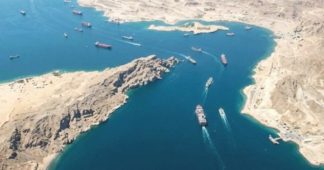
Shipping through the narrow strait has been strangled since the US and Israel attacked Iran in late February.
Iran has sealed off the passage, sharply cutting oil and gas flows and sending prices soaring, while the US has blockaded Iranian ports. Tehran has also said it wants to impose transit fees as part of any lasting peace deal.
US’s Rubio says Iran is ‘serious’ about making a deal
Iran is “serious” about reaching a deal with the US, but any agreement must prevent it from developing a nuclear weapon, US Secretary of State Marco Rubio says.
“I think they are serious about getting themselves out of the mess that they’re in,” Rubio said in an interview with Fox News.
He pointed to Iran’s worsening economic conditions, including inflation, difficulties paying wages and ongoing sanctions, saying: “All the problems that Iran had before the start of this conflict are still in place, and most of them are worse.”
“We have to ensure that any deal that is made … definitively prevents them from sprinting towards a nuclear weapon at any point,” he added.
Iran and the US held talks in Islamabad on April 11 but failed to reach an agreement to end the war, which began on February 28.
The negotiations followed a two-week ceasefire brokered by Pakistan that began on April 8, which was later extended.
We remind our readers that publication of articles on our site does not mean that we agree with what is written. Our policy is to publish anything which we consider of interest, so as to assist our readers in forming their opinions. Sometimes we even publish articles with which we totally disagree, since we believe it is important for our readers to be informed on as wide a spectrum of views as possible.