April 22, 2026
UK universities hired an intelligence firm to monitor pro-Palestine activism, raising serious concerns over surveillance, repression, and academic freedom.
Key Takeaways
- An investigation finds 12 UK universities paid firm to monitor student activism.
- Pro-Palestine students and academics were specifically tracked, profiled, and assessed.
- Experts warn surveillance practices risk legal violations and create a “state of terror” on campuses.
‘Trawled Through Social Media’ and Secret Assessments
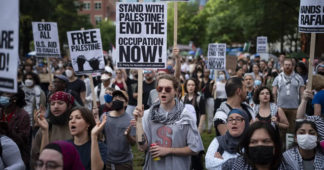
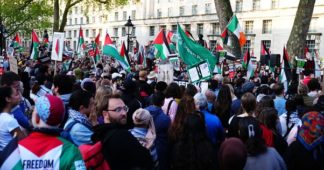
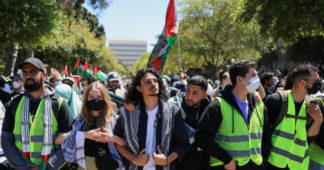
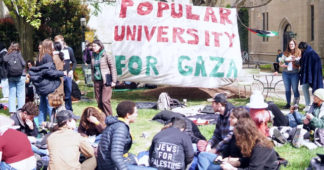
At least 12 British universities paid a private intelligence firm run by former military officials to monitor student activists and academics — particularly those expressing solidarity with Palestine — according to a joint investigation by Liberty Investigates and Al Jazeera.
The firm, Horus Security Consultancy Limited, “trawled through student social media feeds and conducted secret counter-terror threat assessments” on behalf of some of the UK’s most prominent institutions, including Oxford, University College London, King’s College London, and Imperial College.
Internal documents reveal that universities were not passive recipients of information, but actively directed monitoring efforts. In October 2024, for example, the University of Bristol provided Horus with a list of student protest groups it wanted alerts about, explicitly including pro-Palestinian activists.
The firm has been paid at least £443,943 between 2022 and 2025 to provide intelligence briefings compiled through a system designed to “harvest a vast range of sources on the internet,” including thousands of social media posts.
These reports were then circulated internally. One briefing sent to the London School of Economics included a student’s post stating:
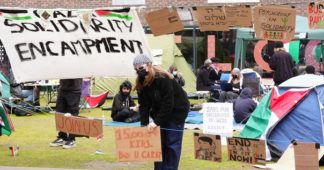
“We may have been evicted, but we are more powerful and organised as a collective than we have ever been!” — one of many posts compiled into daily “encampment updates” sold to universities for £900 per month.
Students were largely unaware they were being monitored. One Ph.D. student said: “We knew surveillance was happening by the university but it is shocking to see how systematised it is,” adding that it is “deeply scary” how much universities are “willing to invest” in such surveillance.
The monitoring also extended to academic activity. Palestinian-American scholar Rabab Abdulhadi was subjected to a secret counter-terror “threat assessment” ahead of a lecture in 2023, despite no evidence of wrongdoing.
Reflecting on the experience, she said: “You’re supposed to be innocent until proven guilty (…) but they actually made an assumption of guilt and started investigating me because of my scholarship.”
‘State of Terror’ and Institutional Crackdown
The investigation has raised serious legal and ethical concerns, particularly regarding the use of artificial intelligence to collect and analyze student data at scale.
Gina Romero, UN Special Rapporteur on the Rights to Freedom of Peaceful Assembly and of Association, reportedly warned that “the use of AI to harvest and analyse student data under the guise of open source intelligence raises profound legal concerns,” explaining that it enables “disproportionate amounts of data on students to be collected” and used in ways they cannot anticipate or challenge.
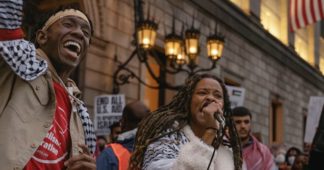
Critics argue that these practices are part of a broader pattern of repression targeting pro-Palestine activism on UK campuses. A report by the European Legal Support Centre found that students and academics were more likely to face disciplinary action for pro-Palestine views than for any other political position.
Romero described the impact on students as severe, warning that such surveillance contributes to a “state of terror,” in which many activists experience “psychological trauma, mental exhaustion, and burnout,” with some abandoning activism altogether.
Trade unions have also condemned the practice. The head of the University and College Union described it as “shameful” that institutions had “wasted hundreds of thousands of pounds spying on their own students.”
Despite the backlash, several universities defended their actions, claiming the monitoring relied on publicly available data and was intended to assess “potential security risks.” Others refused to disclose details of the intelligence briefings, citing commercial confidentiality — even though the information was derived from public sources.
The investigation also highlights the role of Horus itself, a company founded by former military intelligence officials and led by figures who have publicly linked pro-Palestine protests to foreign influence campaigns and called for the deportation of non-British demonstrators.
Taken together, the findings point to a growing convergence between security frameworks, counter-terror legislation, and university governance — one that increasingly treats political activism, particularly in support of Palestine, as a matter of surveillance and control rather than protected expression.
.
We remind our readers that publication of articles on our site does not mean that we agree with what is written. Our policy is to publish anything which we consider of interest, so as to assist our readers in forming their opinions. Sometimes we even publish articles with which we totally disagree, since we believe it is important for our readers to be informed on as wide a spectrum of views as possible.