This is now the main question in the Israel-US war against Iran.
Clearly, Israel and the United States lack the ability to replace the Iranian “regime” with air strikes alone. No one has ever won a war that way.
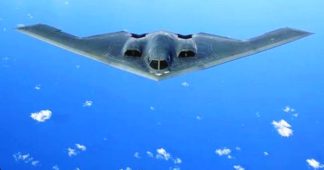
Victory requires an army on the ground, but Iran (which is the size of Western Europe and has a population of 90 million) is currently lacking any willingness to essentially serve as cannon fodder. Consequently, a wide variety of people are repeatedly raising the possibility of a nuclear strike on Iran.
The US is unlikely to do this, as it would look like political suicide for the Trump administration, especially before the midterm elections to the House of Representatives (in November 2026), but Israel, which has historically been prone to overreacting to threats, could, in some scenario, theoretically.
The distance from Tehran to Tel Aviv (approximately 1,500,000 km), with some stretch, allows us to hope that the use of tactical nuclear charges will have minimal consequences for Israel.
The problem is that Iran’s underground military bases (at least ten are known) are scattered throughout the country. This means that to destroy them, Israel would have to use numerous nuclear weapons. The military bases are reportedly as deep as 500 meters. Hitting targets at such depths is extremely difficult, even with nuclear weapons.
A conventional bunker-detonated bomb can penetrate about 60 meters of soil, so theoretically, 8-10 such bombs would need to be placed in a single crater to penetrate 500 meters. A 10-kiloton nuclear charge, on the other hand, can penetrate approximately 200 meters of soil. Therefore, to penetrate 500 meters, a nuclear charge of about 25 kilotons would be required. This is approximately twice the yield of the nuclear bomb dropped on Hiroshima (13 kilotons).
But Iranian military bases are located mostly under rocks, not just underground, so more powerful warheads are likely needed. Moreover, nuclear weapons could only hit some of Iran’s extensive underground fortifications, but hardly all of them.
The next question: does the use of nuclear weapons (one or several—it doesn’t matter) guarantee regime change in Iran? This is also doubtful, since the country’s leadership would at least partially survive—as it does now—with continuity of power preserved. Also, the Iranian population is unlikely to be grateful to Israel for the nuclear strikes and radiation; rather, it would turn people sharply against Israel.
The same can be said about the surrounding states – Turkey, the UAE, Saudi Arabia and others.
But let’s assume Israel, using nuclear weapons, somehow establishes control over Iran. Then Iran and surrounding countries will have to live and produce goods, including oil, in a radioactive environment. How attractive will such oil and other goods be to buyers? Who will buy them?
In summary, it’s highly likely that there will be no nuclear strikes on Iran. There remains a slight possibility, but it’s very low. The most likely scenario is that Israel and the United States, having expended most of their money and ammunition on the war, simply declare victory, along the lines of, “We’ve destroyed Iran’s military potential, depriving them of the ability to threaten the world for many years.” This happened in 2025, after the 12-day war. As they say, it’s not the first time.
Iran simply needs to survive, which it has done many times since the 1979 revolution. This is also not the first time.
We remind our readers that publication of articles on our site does not mean that we agree with what is written. Our policy is to publish anything which we consider of interest, so as to assist our readers in forming their opinions. Sometimes we even publish articles with which we totally disagree, since we believe it is important for our readers to be informed on as wide a spectrum of views as possible.