Top US general warns Syrian “no-fly” zone means war with Russia
By Bill Van Auken
The enforcement of a “no-fly” zone in Syria would mean a US war with both Syria and Russia, the top US uniformed commander told the Senate Armed Services Committee Thursday.
Marine Gen. Joseph Dunford, the chairman of the Joint Chiefs of Staff, spelled out the grave implications of the policy advocated by both predominant sections within the Republican Party as well as Democratic presidential candidate Hillary Clinton amid rising violence in Syria and increasing pressure by Washington on the Russian government to unilaterally agree to grounding its own aircraft as well as those of the Syrian government.
Secretary of State John Kerry has repeatedly demanded that Russia adhere to what would essentially be a one-sided “no-fly” zone under conditions in which US warplanes would continue carrying out airstrikes.
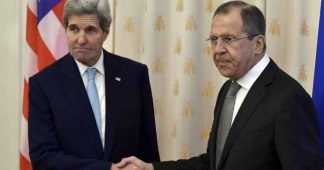
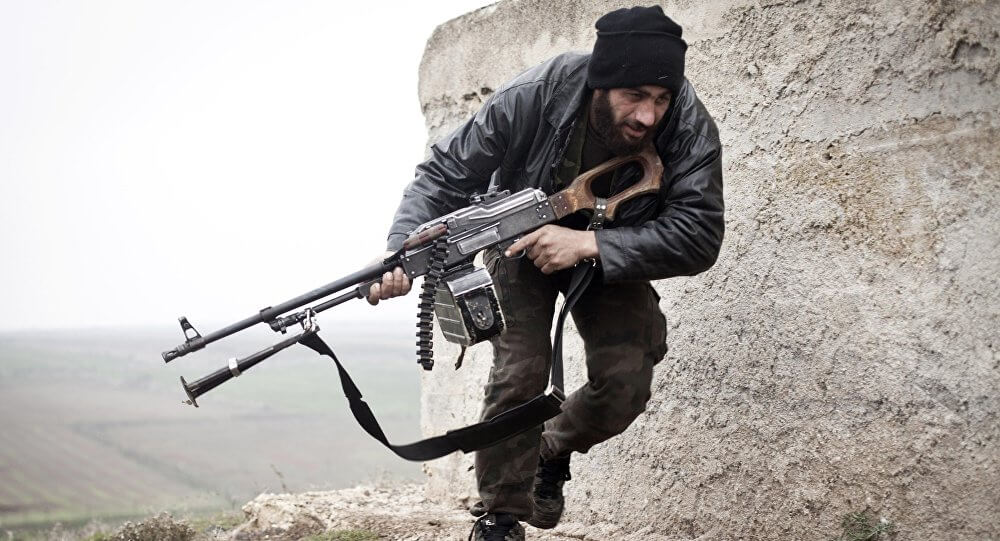
Kerry presented his proposal as a means of reviving and restoring “credibility” to a ceasefire agreement that he and the Russian Foreign Minister negotiated on September 9. This cessation of hostilities collapsed less than a week after its implementation in the face of hundreds of violations by US-backed Islamist “rebels” who have refuse to accept its terms, as well as two major back-to-back attacks.
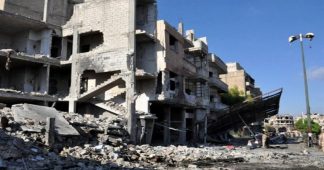
The first was carried out by US and allied warplanes one week ago against a Syrian army position, killing as many as 90 Syrian soldiers and wounding another 100. Washington claimed that the bombing was a mistake, but Syrian officials have pointed to what appeared to be a coordination of the airstrike with a ground offensive by Islamic State (also known as ISIS) fighters who briefly overran the bombed position.
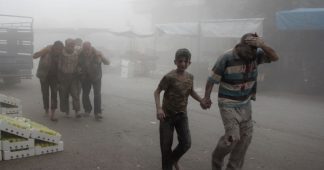
This was followed on September 19 by an attack on a humanitarian aid convoy in Aleppo that killed at least 20 and destroyed 18 trucks. The US immediately blamed Russia for the attack, without providing any evidence to support the charge. Russia and the Syrian government have denied responsibility and suggested that the so-called “rebels” shelled the convoy.
The US position was reflected in the testimony of both Dunford and Defense Secretary Ashton Carter before the Senate panel Thursday. The general admitted to the committee, “I don’t have the facts,” as to what planes carried out the attack, but quickly added, “There is no doubt in my mind that the Russians are responsible.” Similarly, Carter declared, “The Russians are responsible for this strike whether they conducted it or not.”
The collapse of the ceasefire under the weight of these incidents abrogated an agreement that had been bitterly opposed by both Carter and the Pentagon’s uniformed command. The latter have publicly declared their opposition—in terms bordering on insubordination—to the deal’s provision for coordinated actions and intelligence sharing with Russia, which America’s top generals see as the main enemy.
This view was reiterated Thursday by General Dunford, who declared that based on the “combination of their behavior and their military capability, Russia is the most significant threat to our national interests.” Asked if he supported the proposal for intelligence sharing, Dunford responded, “We don’t have any intention of having an intelligence-sharing arrangement with the Russians.”
Speaking in New York Thursday night after the so-called International Syria Support Group ended a meeting with no progress toward restoring the US-Russian ceasefire agreement, Secretary of State Kerry declared: “The only way to achieve that [cessation of hostilities and violence] is if the ones who have the air power in this part of the conflict simply stop using it—not for one day or two, but for as long as possible so that everyone can see that they are serious.”
After leaving the same meeting, Russian Foreign Minister Sergei Lavrov rejected the demand that the Syrian government take “unilateral steps” under conditions in which the US-backed “rebels” reject the ceasefire. “We insist and find support for steps being taken by the opposition as well, so as not to let Jabhat al-Nusra take advantage of this situation,” he said.
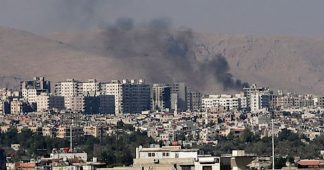
This, however, is precisely the aim of Washington. The US military and intelligence complex is increasingly concerned that with the backing of Russia and Iran, the Syrian government is on the brink of breaking the five-year-old siege waged by the Islamist militias armed and paid by the CIA and Washington’s principal US allies, Saudi Arabia, Turkey and Qatar. Syrian and Russian planes began intense bombardment of “rebel”-held eastern Aleppo Friday in what has been reported as preparation for a major ground offensive to retake this area of the city. If the offensive proves successful, the US war for regime change will have suffered a strategic reversal.
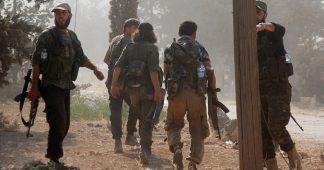
Al Nusra, the Syrian affiliate of Al Qaeda, which is formally designated by both the US and the UN as a terrorist organization, constitutes the backbone of the proxy forces employed by US imperialism to effect regime change in Syria. One of the major controversies surrounding the US-Russian truce agreement was its call for the US to persuade the “rebels” on its payroll to separate themselves from Al Nusra. This Washington was unable and unwilling to do, both because they are so closely integrated with the Al Qaeda elements and because they could not survive as a fighting force without them.
The imposition of a no-fly zone over Aleppo and other Al Nusra-controlled areas is increasingly seen as a life and death matter for the US-backed Islamists. As Thursday’s Senate hearing indicated, while Kerry is appealing to Russia to voluntarily stand down, there are significant elements within the US state that are calling for the imposition of the no-fly zone by force.
Gen. Dunford was asked by Mississippi Republican Senator Roger Wicker if the US could take “decisive action” in imposing a no-fly zone. Wicker indicated that he had discussed the matter with Democrats, who indicated that they would support such a venture if the US intervention were given another name.
“For now, for us to control all the airspace in Syria would require us to go to war with Syria and Russia,” Dunford replied to the Senator. “That’s a pretty fundamental decision that certainly I’m not going to make.”
Dunford’s remark provoked an intervention by the committee chairman, Republican Senator John McCain of Arizona, who pushed him to clarify that total control of the Syrian airspace would require war with Russia and Syria, while a no-fly zone could potentially be imposed short of that.
The hearing provided a chilling exposure of the discussions going on within the US state and its military over actions that could quickly spiral into an all-out confrontation with nuclear-armed Russia, bringing humanity to the brink of catastrophe.
In separate remarks the day before the Senate hearing, both Carter and Dunford stressed that the US will maintain its military deployment in the Middle East long after the defeat of ISIS, the pretext for the current interventions in Iraq and Syria.
Speaking to the Air Force Association conference, Dunford declared, “If you assume, like I do, that we’re going to be in that region, if not Iraq, for many, many years to come,” decisions would have to be taken on the establishment of permanent military headquarters and command-and-control infrastructure.
“What is obvious and very clear is that we’re going to be in that region for a while,” Carter declared in a “troop talk” streamed live on social media. He added: “ISIL is a big problem, but one we’re going to take care of through defeat. But we have Iran over there, we have other issues in the Middle East.”
In other words, Washington is planning the continuation of its unending wars in the Middle East, including military action directed against Iran, with the aim of imposing American hegemony over the region’s vast energy resources and strategically weakening the principal targets of US imperialist aggression, Russia and China.