By Qamar Taleb
Feb 09, 2026
This article provides a full rundown of the Epstein Files, highlighting the most important revelations from millions of recently released documents. From Epstein’s rise, wealth, and criminal network to his ties with global elites and the Mossad, it distills the key facts, exposing the power, influence, and systemic failures that allowed him to operate with impunity.
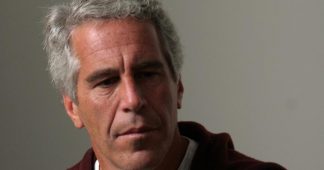
Born in 1953 in Brooklyn, New York, to Jewish parents, Jeffrey Epstein would later become one of the most infamous figures of the modern era: a convicted sex offender accused of orchestrating a vast, international sex-trafficking operation involving underage girls, while maintaining close relationships with politicians, financiers, academics, royalty, and cultural elites.
With the US Department of Justice recently releasing more than 3 million pages of documents related to the Epstein case, often referred to in public discourse as the “Epstein files”, it has become increasingly important to understand not only the scope of his crimes, but who Epstein was, how he accumulated extraordinary wealth and influence, and how institutions repeatedly enabled him.
What follows is a reconstruction of Epstein’s life and rise, based primarily on a years-long investigative series by The New York Times, drawing on court records, financial documents, interviews with former associates, and previously unreleased archival material.
Early Life and Education
Jeffrey Epstein was the first of two children born to Paula Epstein, a homemaker, and Seymour Epstein, a groundskeeper for New York City’s Parks Department. The family lived a modest, working-class life in Brooklyn.
Epstein attended Lafayette High School in Gravesend, where he showed notable aptitude in mathematics. He skipped two grades and graduated in 1969 at 16 years old. That same year, he enrolled at Cooper Union, later transferring to the Courant Institute of Mathematical Sciences at New York University. Although he studied at NYU for several years, he never completed a degree.
First job: Teaching at Dalton School (1974–1976)
Despite lacking formal credentials, Epstein secured a teaching position in 1974 at the elite Dalton School on Manhattan’s Upper East Side. The school catered to children of New York’s wealthiest families.
According to The New York Times, Epstein immediately stood out, not for pedagogical excellence, but for behavior that unsettled students and colleagues. Former students later recalled his fixation on teenage girls, his disregard for professional boundaries, and his habit of attending student parties where alcohol was present. Though no criminal charges were ever brought related to his time at Dalton, several students said his conduct left a lasting impression.
Epstein was ultimately dismissed after administrators deemed his teaching inadequate. However, Dalton would prove to be the launchpad for his entry into high finance.
Entry Into Wall Street: Bear Stearns (1976–1981)
During a parent-teacher conference, Epstein impressed the father of a student, who referred him to Alan “Ace” Greenberg, CEO of Bear Stearns. Greenberg, known for hiring “unconventional” talent, offered Epstein a position despite his lack of experience or degrees.
At Bear Stearns, Epstein rose with unusual speed. He cultivated relationships with senior executives, dated Greenberg’s daughter for a time, and quickly gained access to wealthy clients. Internal concerns emerged early: Epstein had lied about his academic credentials, abused expense accounts, and violated firm rules. Yet he repeatedly avoided serious consequences.
By 1980, Bear Stearns named Epstein a limited partner, and he was earning the equivalent of over $800,000 a year in today’s dollars. That same year, Cosmopolitan featured him as “Bachelor of the Month.”
In 1981, following an internal investigation involving improper trading privileges and personal loans, Epstein resigned rather than accept suspension. His exit was quiet, but the connections he forged there became foundational to everything that followed.
How Epstein Got Rich: A Pattern, Not a Genius
Contrary to the myth of Epstein as a financial prodigy, The New York Times found no evidence that he built his fortune through exceptional investment skill. Instead, his wealth emerged through a recurring pattern with core methods identified by investigators as:
- Exploiting elite trust by exaggerating or fabricating credentials
- Leveraging personal and sexual relationships to gain access and protection
- Abusing expense accounts and inside information
- Orchestrating borderline-legal or outright fraudulent schemes
- Avoiding accountability through institutional tolerance
Epstein moved steadily from small deceptions to large-scale financial misconduct, often burning benefactors once they were no longer useful.
Early Schemes and Financial Misconduct (1981–1986)
After leaving Bear Stearns, Epstein partnered with former Justice Department official John Stanley Pottinger, pitching tax-avoidance strategies to wealthy clients. Around this time, he began falsely presenting himself as a “bounty hunter” who tracked hidden assets.
In 1982, Epstein persuaded businessman Michael Stroll to invest $450,000, roughly 10% of his net worth, in a supposed oil deal. The money disappeared. Epstein ultimately prevailed in civil court on technical grounds, keeping the funds. Investigators later described this as a turning point: Epstein had graduated from manipulation to outright financial predation.
Ponzi Exposure and Market Manipulation (Late 1980s)
Epstein became deeply involved with Steven Hoffenberg, whose company, Towers Financial, later collapsed as a $500 million Ponzi scheme. Hoffenberg accused Epstein of helping orchestrate the fraud, an allegation Epstein denied.
Around the same time, Epstein participated in stock-price manipulation, most notably involving the chemical company Pennwalt. He recruited investors, inflated share prices by announcing takeover bids, then sold at a profit, while allegedly refusing to return investors’ money. By 1988, Swiss banking documents showed Epstein was worth approximately $15 million.
The Wexner Era: From Millionaire to Power Broker (Late 1980s–1990s)
Epstein’s decisive leap into extreme wealth came through Leslie Wexner, billionaire founder of The Limited and Victoria’s Secret.
After being introduced by a mutual acquaintance, Epstein convinced Wexner to grant him power of attorney over vast financial and charitable assets, an extraordinary arrangement. According to later statements by Wexner, Epstein misappropriated tens of millions of dollars over time.
With Wexner’s money and credibility, Epstein acquired:
- A Palm Beach mansion near Mar-a-Lago
- A Manhattan townhouse
- An Ohio estate
- Private jets
- Later, Little St. James, his private island in the US Virgin Islands
Wexner’s name opened doors to banks, politicians, universities, and global elites. For decades, Epstein cited Wexner as proof of legitimacy.
Social Capital and Institutional Legitimacy
Through strategic donations and board memberships, Epstein embedded himself within these elite institutions:
- Rockefeller University
- The Trilateral Commission
- The New York Academy of Art
- Harvard University
These affiliations were often used to recruit victims, attract clients, and silence skepticism. According to The New York Times, many institutions failed to scrutinize the source of his wealth or behavior.
The Maxwells and the Criminal Enterprise
In the early 1990s, Epstein met Ghislaine Maxwell, the daughter of British media tycoon Robert Maxwell. After her father’s death, Epstein supported her financially and socially. The two became inseparable.
It was during this period that Epstein’s sex-trafficking operation expanded dramatically. Maxwell was later convicted for her central role in recruiting and grooming underage girls and is serving a 20-year federal sentence.
But to understand this network more clearly, it is necessary to examine who Robert Maxwell actually was and the nature of his relationship with “Israel.”
Robert Maxwell was not merely a media baron; he was one of the most opaque and controversial power brokers in British public life. Born Ján Ludvík Hoch to a Jewish family in what was then Czechoslovakia, Maxwell survived the Holocaust while most of his family did not.
After fleeing to Britain, he remade himself entirely, changing his name, embedding himself in elite circles, and leveraging his wartime service in the British Army into social and political capital.
From these foundations, he constructed a sprawling media empire that included influential outlets such as the Daily Mirror and the New York Daily News. Behind the image of dominance and authority, however, his businesses were riddled with debt, mismanagement, and deception.
Maxwell cultivated a reputation as an untouchable figure, aggressive, authoritarian, and obsessively controlling. His political ambitions were explicit, and his proximity to power was carefully engineered. Yet when his empire began to unravel, it became clear that much of it was propped up by fraud.
Following his death in 1991, after he fell from his yacht near the Canary Islands, investigators uncovered that Maxwell had siphoned hundreds of millions of pounds from employee pension funds to keep his collapsing companies afloat.
Although official findings ruled his death an accident, the circumstances surrounding it have remained a source of enduring doubt, with persistent questions about whether it was suicide or something more.
Central to Maxwell’s influence were his extensive and deliberate ties to “Israel.” He was an outspoken supporter of the Israeli occupation and poured significant resources into Israeli industries, particularly publishing, pharmaceuticals, and emerging technologies.
He moved comfortably among “Israel’s” political elite and was widely treated as a reliable external asset who advanced its interests abroad. These relationships were made unmistakably clear after his death, when he was granted an extraordinary funeral in occupied al-Quds. Senior Israeli officials attended, and he was buried on Jabal al-Zaytoun, an “honor” almost never extended to non-Israelis, underscoring the depth of his importance to the Israeli occupation.
It was these facts, not rumor alone, that intensified long-standing claims of Maxwell’s links to Israeli intelligence. While Maxwell publicly rejected allegations of working with Mossad, and no conclusive documentation has been released to definitively prove such a role, the convergence of his political access, financial entanglements, strategic value, and the exceptional treatment he received in death ensured that such suspicions never disappeared. His legacy remains inseparable from these unanswered questions.
Now Epstein becomes rich….
By the late 1990s, Epstein was worth over $100 million, controlled vast properties, and enjoyed protection from banks, politicians, and legal institutions. His criminal behavior accelerated in parallel with his wealth.
Continue reading at: english.almayadeen.net/news/
.
We remind our readers that publication of articles on our site does not mean that we agree with what is written. Our policy is to publish anything which we consider of interest, so as to assist our readers in forming their opinions. Sometimes we even publish articles with which we totally disagree, since we believe it is important for our readers to be informed on as wide a spectrum of views as possible.