By: teleSUR English
December 8, 2025
UN reports indicate ongoing violations in Syria, including extrajudicial killings, kidnappings, and looting.
Syria is going through a critical transitional phase this year following the coup that ousted former President Bashar al-Assad and the rise of Ahmed Sharaa, formerly known as Abu Muhammad al-Julani, as the country’s transitional president.
This unprecedented political shift has redrawn internal and regional power balances and raised serious questions about the new authority’s ability to restore stability and rebuild state institutions.
Sharaa’s ascent comes at a time when the country faces immense challenges: bloody massacres in the coastal region and Sweida, widespread security collapse, and the deterioration of state institutions.
At the same time, the transitional president has sought to gain international legitimacy and improve the image of his government, attempting to convince the world of his ability to lead Syria toward stability despite his controversial past, which raises widespread concerns domestically and internationally.
Political Transition and Sharaa’s Rise
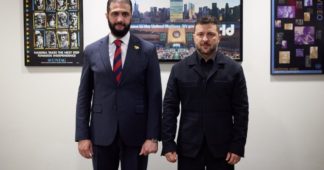
From the moment Sharaa assumed power, he sought to convince the international community of his capacity to lead Syria toward stability. This effort peaked during an official visit to the United States, where he met former U.S. President Donald Trump in an unannounced meeting.
The encounter was seen as an attempt to redraw post-Assad balances, despite objections from Congress and human rights organizations due to Sharaa’s jihadist background.
International coverage indicated that Sharaa’s foreign moves aimed to gain legitimacy and reduce pressure on his transitional government, presenting himself as capable of steering Syria toward stability.
Despite this diplomatic visibility, the domestic reality has been starkly different, with waves of violence, massacres, and a clear decline in the ability of state institutions to enforce the law.
Coastal and Sweida Massacres
In March, Syria’s coastal region witnessed one of the deadliest waves of violence since the start of the transitional phase, with armed groups linked to the new authority attacking villages in rural Latakia under the pretext of “pursuing former regime cells.”
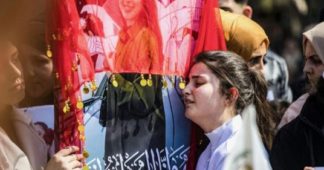
According to international human rights reports, these attacks resulted in the deaths of hundreds of civilians from the Alawite community, along with mass displacement and widespread arrests, raising concerns over identity-based targeting.
Weeks later, Sweida province—predominantly Druze—experienced another massacre killing hundreds of civilians, carried out by pro-government groups claiming to dismantle “local opposition militias.”
These attacks caused severe sectarian tensions and accusations that the transitional authority was using security forces to settle political and social scores.
Widespread Security Collapse
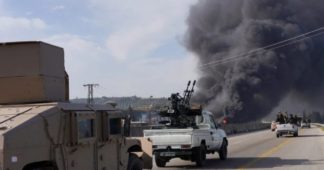
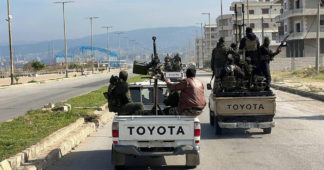
Alongside the massacres, independent reports indicate a total security breakdown, including: random armed attacks on roads and internal crossings; kidnappings for ransom as a source of funding for armed groups; and a complete decline in police and judiciary authority, leaving them largely ineffective.
This collapse reflects the new authority’s failure to impose a stable governance model and raises questions about its ability to manage a complex transitional phase in a politically and religiously diverse country.
Sharaa’s Foreign Policy
In addition to meeting Trump, Sharaa conducted international tours in the Gulf, Turkey, Jordan, and Europe, seeking economic support and urgent investment for reconstruction.
Despite these efforts, the international community remains cautious in granting him full legitimacy, with the European Union requiring improvements in humanitarian conditions and a halt to violations as conditions for cooperation.
Transitional Justice: Limited Steps Amid Continuing Violations
As the anniversary of Assad’s fall approaches, UN reports indicate ongoing violations in Syria, including extrajudicial killings, kidnappings, sexual violence, arbitrary detention, and looting, often targeting specific communities such as Alawites, Druze, Christians, and Bedouins.
The report also noted the integration of former armed groups into security forces without sufficient oversight, contributing to the ongoing security collapse, alongside repeated Israeli military strikes causing civilian damage.
The UN High Commissioner called for an independent, comprehensive investigation and accountability for those responsible, emphasizing that justice, peace, and security are essential for a successful transitional phase.
Conclusion: Syria at a Crossroads
One year after Assad’s fall, Syria stands at a dangerous crossroads: success in establishing a stable governance model under Sharaa; a slide into deeper internal conflict; or entering a new political path unseen since 2011.
Currently, facts suggest that Syria remains in a complex transitional period, balancing between a government seeking international recognition and a domestic reality trending toward chaos and violence, leaving the transitional president’s ability to lead the country toward stability uncertain.
#FromTheSouth News Bits | Middle East: In Syria, a suicide bomber attacked the Mar Elias Greek Orthodox Church in Damascus, killing 20 people and wounding at least 52 others. pic.twitter.com/lB5SY8aqi4
— teleSUR English (@telesurenglish) June 27, 2025
.
We remind our readers that publication of articles on our site does not mean that we agree with what is written. Our policy is to publish anything which we consider of interest, so as to assist our readers in forming their opinions. Sometimes we even publish articles with which we totally disagree, since we believe it is important for our readers to be informed on as wide a spectrum of views as possible.