By Benjamin Santer*
January 12, 2026
Whether the president and his supporters like it or not, the United States is part of a complex, interconnected world. Global supply chains, commerce, and economies are intricately intertwined.
Countries are connected electronically via the internet, email, and social media. Humans are also linked through a shared global climate system, which influences—and can be influenced by—life on Earth.
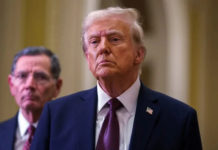
On January 7, President Donald Trump, citing “the authority vested in me as President by the Constitution and the laws of the United States of America,” withdrew the United States “from International Organizations, Conventions, and Treaties that Are Contrary to the Interests of the United States.”
The list of “Organizations from which the United States Shall Withdraw” has 66 entries. It is divided into two categories: non-United Nations (UN) organizations and UN organizations.
The list contains such diverse entities as the International Renewable Energy Agency, the International Solar Alliance, the Partnership for Atlantic Cooperation, the UN International Law Commission, the Office of the Special Representative of the Secretary General for Children in Armed Conflict, the UN Peacebuilding Commission, and the International Union for Conservation of Nature. Under the Trump Administration, international law, conserving nature, protecting children from war, developing renewable energy, and building peace are issues antithetical to US interests.
As one might expect given the administration’s systematic efforts to dismantle US climate science, international climate organizations and treaties are also on “the list of 66.” Examples include the Inter-American Institute for Global Change Research and the UN Framework Convention on Climate Change (UNFCCC). The UNFCCC seeks to avoid dangerous anthropogenic interference with Earth’s climate—a goal that should be of interest to the United States, but apparently is not.
The US Senate ratified the decision to join the UN Framework Convention on Climate Change in 1992. As others have already pointed out, it might not even be legal for Trump to unilaterally withdraw the country from the UNFCCC without Senate approval.
At number 14 on “the list of 66” is the Intergovernmental Panel on Climate Change—the IPCC. The United States is a part of the IPCC through its membership in the UN and the World Meteorological Organization. There is no formal process for disengaging from the IPCC, because it’s a scientific body, not a treaty. A country can just stop contributing or participating in the IPCC’s activities, which the Trump administration has effectively done since assuming office. This new announcement is mostly for show.
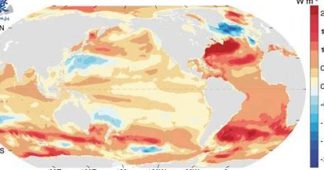
The global climate system is indifferent to human territorial boundaries. It is not indifferent to human actions. By burning fossil fuels and altering the land surface, humans raised global atmospheric carbon dioxide levels. Other types of activity produced additional heat-trapping greenhouse gases, like methane, nitrous oxides, and fluorocarbons. In consequence, Earth’s global surface temperature has increased by roughly 1.5 degrees Celsius since the late 1800s. This may not sound like much, but it is. The size and rapidity of recent human-caused warming is deeply concerning. This deep scientific understanding of the reality and seriousness of human effects on climate arises in part from the seminal work of the IPCC.
Since its inception in 1988, the IPCC has advised governments on three broad aspects of climate change: the physical science; impacts, adaptation, and vulnerability; and ways of mitigating projected 21st century changes in climate. The IPCC publishes definitive scientific assessments on all three topics. Each topic is assessed by a separate Working Group.
The IPCC first assessment report appeared in 1990. The sixth assessment was published in 2021. The seventh assessment is currently underway, with a target completion date in 2029.
I’ve served as a lead author or contributing author to the Working Group I reports of all six previous IPCC assessments—the reports dealing with the physical science of climate change. My expertise is in the evaluation of climate models, the analysis of atmospheric temperature data sets, and the identification of human “fingerprints” in observed climate records. My three decades of IPCC service inform this essay on what the United States will lose by leaving the IPCC.
The IPCC has been a particularly valuable instrument and forum for synthesizing, assessing, and sharing climate change science. Working together with organizations like the World Climate Research Programme, the IPCC facilitates the global “coming together” of many thousands of climate scientists. This coming together consists of far more than simply writing assessment reports.
After the 1990 IPCC report, it was recognized that the scientific value of such assessments would be enhanced by improved coordination of international climate modeling efforts. Rather than simply relying on a patchwork quilt of available off-the-shelf simulations, scientists figured out what types of simulation might be most useful for the entire community to perform. They agreed on simulation protocols, the simulation output to save, data storage, and naming conventions. They developed hardware and software for sharing petabytes of modeling results and climate data.
IPCC assessments provided impetus for the rise of the MIPs—model intercomparison projects. MIPs help scientists to do a better job with model diagnosis and quantification of uncertainties. If every climate modeling group performs the same numerical experiment, it’s a little easier to answer key questions. How well do models capture key features of today’s climate? By how much do climate change projections differ when models are run with the same high levels of atmospheric carbon dioxide? What aspects of these projections are we most confident about? What aspects are most uncertain? Where are the research gaps that need to be filled?
I like to think that the goal of the IPCC—to produce the best-possible assessments of climate science—spurred the rise of the MIPs. In turn, the information from MIPs enabled the IPCC to produce more comprehensive assessments. The IPCC process helped to provide grains of sand around which pearly layers of scientific knowledge accreted. Would this knowledge have been gained without the need for periodic IPCC assessments of climate science? Certainly—but I think it would have been gained more slowly.
For me and for hundreds of other US climate scientists, participation in IPCC assessments was life-changing. In my case, I had the opportunity to work on a key chapter of the IPCC’s 1995 Second Assessment Report—the chapter dealing with climate change detection and attribution. Our 1995 finding of a “discernible human influence on global climate” was historic. It mattered. After 1995, governments could no longer plead that they were ignorant of the climate consequences of fossil fuel burning. They knew the scientific facts. The IPCC told them the facts and the truth. Again and again and again.
If you don’t like scientific facts, you bury them. You come up with counternarratives to the facts. With alternative facts. You pull the plug on US involvement in effective international knowledge-gathering and assessment organizations like the IPCC. You deny federally funded US climate scientists the opportunity to work on IPCC reports, and to collaborate with international colleagues. You deny the United States a seat at the global table of countries developing IPCC reports. You diminish your country’s standing and influence.
I’m grateful that I live in a world in which there is an Intergovermental Panel on Climate Change, dedicated to improving our understanding of human influence on Earth’s climate system and to sharpening our picture of the likely “shape of things to come” for 21st century climate. I’m grateful I don’t live in a counterfactual world in which we are solely reliant on the Trump administration for information on how and why Earth’s climate is changing. That would be a dark and ignorant world.
I hope that the decision to withdraw from the IPCC will not be lost in the noise of dysfunction and chaos that now characterizes daily life in the United States. The decision clearly demonstrates that the US government is turning its back on science, facts, and reason, and embracing antiquated, polluting energy-production systems that have no future.
The US president has made it known that he covets the Nobel Peace Prize. Nobel Peace Prizes are not awarded for the willful destruction of Earth’s climate system. Or for invading other countries. Or for unleashing militarized forces on the streets of US cities.
Perhaps Trump’s animus towards the IPCC stems from the fact that it was awarded the 2007 Nobel Peace Prize (jointly with Al Gore) for its efforts to “build up and disseminate greater knowledge about man-made climate change.”
I’m proud that since its inception in 1988, the United States has played an important role in the IPCC. I hope that even after the IPCC made it onto Donald J. Trump’s list of “International Organizations, Conventions, and Treaties that Are Contrary to the Interests of the United States,” US scientists will still find ways to make important contributions to the IPCC.
The president is not the sole arbiter of what is in the best interests of the United States. Every US citizen has a say in defining those interests. What is truly contrary to the interests of the United States is the willful ignorance of the Trump administration on issues like climate change and vaccine safety. Such ignorance is also contrary to the interests of all global citizens who seek to live and thrive on this pale blue dot in the cosmos.
*Ben Santer is a Professor in the School of Environmental Sciences at the University of East Anglia. He is a member of the U.S. National Academy of Sciences, a John D. and Catherine T. MacArthur Fellow, and a contributor to all six scientific assessment reports of the Intergovernmental Panel on Climate Change.
We remind our readers that publication of articles on our site does not mean that we agree with what is written. Our policy is to publish anything which we consider of interest, so as to assist our readers in forming their opinions. Sometimes we even publish articles with which we totally disagree, since we believe it is important for our readers to be informed on as wide a spectrum of views as possible.