By Al Jazeera Staff
16 Apr 2026
Tehran ‘striving’ to compel the US and Israel to establish a permanent ceasefire in all conflict zones, Iranian parliament speaker tells his Lebanese counterpart.
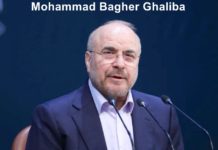
The speaker of Iran’s parliament, Mohammad Bagher Ghalibaf, has told his Lebanese counterpart that a ceasefire in Lebanon is “as important” as in Iran, according to a statement on social media.
In talks to end the war between Iran and the United States, Tehran has “been striving to compel our enemies to establish a permanent ceasefire in all the conflict zones”, Ghalibaf wrote on Telegram on Thursday.
“For us, a ceasefire in Lebanon is just as important as a ceasefire in Iran,” he told Lebanon’s Nabih Berri in a phone conversation, according to his post.
Ghalibaf led the Iranian delegation at the first US-Iran negotiations in Pakistan at the weekend. They ended without a deal.
Tehran has consistently said a two-week ceasefire between it and Washington that ends on Wednesday must apply to Lebanon as well, something the US and Israel have said is not part of the agreement.
Ghalibaf told Berri that the Iranians “have never forgotten our Lebanese brothers and consider them to be among us”, the Telegram post added.
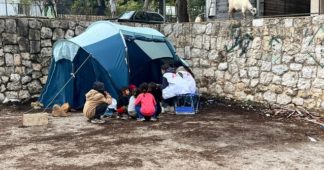
Berri detailed the latest Israeli attacks on Lebanon, the post continued, and told Ghalibaf that so far, 1.2 million Lebanese people have been displaced by the fighting.
“Israel is literally committing crimes in our country and seeking to displace Lebanese people,” the post quoted Berri as saying.
“Any official communication and consultation with the Zionist regime [Israel] is definitely not in the interests of the Lebanese people,” Berri told Ghalibaf, adding that he appreciated Iran’s efforts in trying to secure a ceasefire in Lebanon.
Hezbollah said the attacks were in retaliation for Israel’s killing of Iranian Supreme Leader Ali Khamenei on the first day of the war, February 28, as well as Israel’s near-daily violations of a ceasefire it agreed to in Lebanon in November 2024.
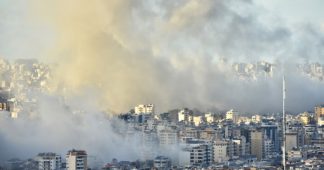
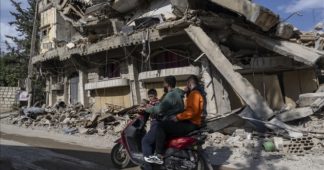
Since March 2, Israeli forces have killed more than 2,000 people in Lebanon.
Al Jazeera’s Obaida Hitto, reporting from Tyre in southern Lebanon, said on Thursday that the Qasmiyeh Bridge had been “cut in half by the latest Israeli strike”, warning that the destruction of the bridge, which had linked the country’s north and south across the Litani River, would worsen its humanitarian crisis.
“Over one million people are internally displaced in Lebanon, and about 100,000 to 150,000 civilians are still south of this river, according to the UN. They are now essentially cut off from the rest of the country,” Hitto said.
Late on Wednesday, US President Donald Trump announced that the leaders of Israel and Lebanon would speak to each other for the first time in 34 years on Thursday. Although an Israeli official confirmed the reports, the Lebanese government has not yet commented. The Reuters news agency quoted several Lebanese officials as saying President Joseph Aoun would not speak with Israeli Prime Minister Benjamin Netanyahu.
In a call with US Secretary of State Marco Rubio on Thursday, Aoun expressed appreciation “for the efforts Washington has been making to reach a ceasefire”, a statement from the Lebanese president’s office said. But it did not mention any possible call with Netanyahu.
.
We remind our readers that publication of articles on our site does not mean that we agree with what is written. Our policy is to publish anything which we consider of interest, so as to assist our readers in forming their opinions. Sometimes we even publish articles with which we totally disagree, since we believe it is important for our readers to be informed on as wide a spectrum of views as possible.