QatarEnergy has halted LNG outputs following Iranian strikes on its key gas hubs as part of its response to the US-Israeli aggression.
Mar 2, 2026
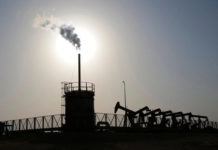
Qatar’s state-run energy giant said Monday it has suspended liquefied natural gas (LNG) production after Iranian drone strikes targeted facilities at two of its main processing bases, skyrocketing global gas prices.
In a statement, QatarEnergy said it halted LNG and related output “due to military attacks” on operating facilities in Ras Laffan Industrial City and Mesaieed Industrial City, the country’s primary gas processing and export hubs.
Qatar’s Defense Ministry confirmed that one drone struck an energy facility at Ras Laffan, while another targeted a water tank at a power plant in Mesaieed.
No casualties were reported, but the disruption rattled markets. The Dutch TTF natural gas benchmark, Europe’s main LNG price gauge, surged nearly 45% to above €46 ($54).
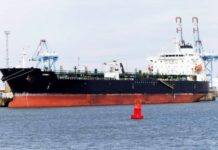
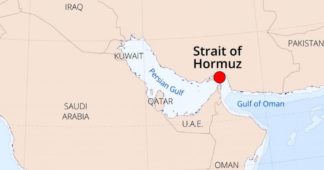
Qatar is among the world’s top LNG exporters, alongside the United States, Australia, and Russia, and the halt raised concerns about supply shocks as shipping through the Strait of Hormuz remains effectively blocked amid Iranian warnings.
‘An unprecedented development’
Jamie Ingram, managing editor of Middle East Economic Survey, called the suspension “an unprecedented development,” noting Ras Laffan is the largest single LNG facility globally. He said the move appeared precautionary and warned of “scope for prices to rise significantly.”
Justin Alexander, director of Khalij Economics, said the decision was “clearly precautionary” given the risks to “extremely flammable gas facilities,” adding that the broader market impact stems from Hormuz’s closure, which blocks roughly a quarter of global energy flows. He cautioned that the shutdown could delay a return to normal supply even after transit resumes.
Qatar shares the world’s largest natural gas reservoir with Iran. Its North Field alone accounts for about 10% of global known gas reserves.
The Gulf state has recently secured long-term LNG supply deals with TotalEnergies, Shell, Petronet LNG, Sinopec, and Eni, deepening its role as a cornerstone supplier to Europe and Asia.
Oil prices surge as Hormuz shipping halted
The Iranian strikes come as a direct result of the Israeli-US aggression on the Islamic Republic, which were launched in the middle of talks and de-escalation efforts.
Iran had warned that any attack on its sovereignty would reap steep consequences, including the targeting of US military bases and interests across the region. Concerns over the disruption of trade routes, particularly through the Hormuz Strait, have also caused significant economic setbacks on Western countries.
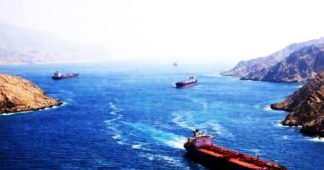
While Iran has not formally declared the waterway closed, insurers and major shipping firms have scaled back operations, increasing war-risk premiums and creating what analysts describe as a de facto disruption of traffic.
In early Asian trading, Brent crude surged, at one point climbing roughly 10–13% to between $80 and $82 per barrel, as investors weighed the risk that sustained hostilities could disrupt flows through the Strait of Hormuz, a strategic corridor essential to global energy supplies. Oil benchmarks had already been hovering near multi-month highs amid tightening inventories and escalating geopolitical tensions in West Asia, magnifying the market’s sensitivity to any supply threat.
The narrow passage, which carries about one-fifth of globally traded oil and roughly 20% of global liquefied natural gas shipments, quickly became the epicenter of market anxiety. Nearly all LNG exports from Qatar and the United Arab Emirates transit through the strait, leaving limited alternative routes should passage become restricted. Reports that Iranian forces warned tankers to avoid transiting the Strait of Hormuz heightened concerns that commercial shipping could be deterred from entering the chokepoint, tightening an already fragile market.
We remind our readers that publication of articles on our site does not mean that we agree with what is written. Our policy is to publish anything which we consider of interest, so as to assist our readers in forming their opinions. Sometimes we even publish articles with which we totally disagree, since we believe it is important for our readers to be informed on as wide a spectrum of views as possible.
 Iran’s top security body to decide on Hormuz closure…
 Iran’s Parliament Votes To Close Strait of Hormuz in…
 World’s Biggest Gas Field in Crosshairs: Qatar…
 Iran moves to close Strait of Hormuz after strikes
 Oil prices sink after Iranian strike on US airbase…
 Trump Close To a Major Attack on Iran That Will Be…