By Abayomi Azikiwe* Global Research
January 08, 2026
Building unification on the continent represents the greatest threat to imperialism
During the first year of the second non-consecutive term of the administration of President Donald Trump has been marked by accusations and threats against the African continent.
Africa has been enslaved, underdeveloped, colonized and neo-colonized since the mid-15th century by several European countries resulting in the contemporary international division of labor and economic power.
In the first administration of Trump, he referred to African states and other territories of the Global South as “S-hole” countries. His attacks on migrants and people of color communities were unrelenting.
Today the situation has worsened with the imposition of unjustifiable tariffs against foreign countries and travel bans into the United States. Although there were similar bans during the first administration of Trump, the list of states has expanded along with the suspension of humanitarian and development assistance to entire geo-political regions of the world.
In Trump’s first address before the U.S. Congress during the early months of 2025, he attacked the Southern African state of the Kingdom of Lesotho. It was also announced that Washington was again withdrawing from the World Health Organization (WHO) which provides assistance to underdeveloped states regarding medicines, funding for clinics and research on the proliferation of infectious and non-communicable diseases.
The South African Government of National Unity (GNU) headed by President Cyril Ramaphosa of the African National Congress (ANC) was accused of pursuing a program of genocide against the white population, principally the Afrikaners (Boers), who had dominated the majority African population since the late 17th century. In fact, it was the Boers which killed and contained millions of Africans under settler-colonialism and apartheid.
AES States Facing Destabilization
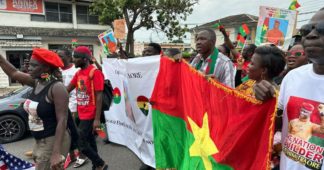
The former Commander of the U.S. Africa Command (AFRICOM) General Michael Langley testified before the Congress early on in 2025 accusing the transitional leader of the West African state of Burkina Faso of utilizing resources from the marketing of gold to finance his administration. This statement prompted protests across West Africa and internationally.
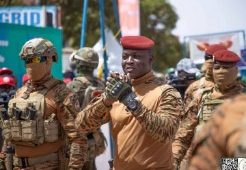
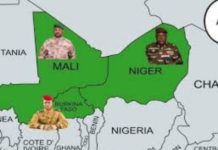
There have been numerous attempts to overthrow the government Capt. Ibrahim Traore in Burkina Faso along with efforts to undermine the objectives of the Alliance of Sahel States (AES) which consist of the three military governments of Mali, Niger and Burkina Faso. In December of 2025, the AES formed a joint military force to more effectively address the security concerns of the region.
These states signed the Liptako-Gourma Charter in September 2023 aimed at facilitating trade between all three of the landlocked states. The AES has reached out to the Russian Federation for assistance related to security matters.
All of these states have been inflicted with purportedly Islamist rebels which have blockaded oil supplies into the capital city of Bamako in Mali. In Niger, the rebels are attempting to undermine the efforts aimed at restructuring the uranium industry, one of the largest deposits internationally. Burkina Faso, which also has an abundance of natural resources, has been providing ideological orientations based upon the legacy of the martyred Capt. Thomas Sankara from the mid-1980s.
The breaking of diplomatic relations with France and escalating tensions with the U.S. has alarmed the imperialist states in Europe and their allies on the African continent. A delegation from the State Department traveled to Mali in 2025 ostensibly to discuss security issues with the government of military leader and interim President Col. Assimi Goita. However, the threat of greater instability remains a reality for the people of Mali in their attempts to chart an independent development course.
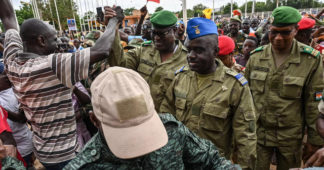
Although there have been several attempts to invite the AES governments back into the Economic Community of West African States (ECOWAS), the regional organization now compose of 12 countries, they have refused. These states were expelled and then voluntarily relinquished their membership after the Federal Republic of Nigeria during mid-2023 sought to intervene militarily to reinstall the civilian puppet leader of Niger, President Mohamed Bazoum.
The attempts to mobilize an ECOWAS force backed by Paris and Washington to invade Niger to overthrow the Committee to Safeguard the Homeland (CNSP) administration headed by Presidential Guard Commander Abdourahamane Tchiani, failed due to widespread opposition throughout the region including in Nigeria. However, destabilization attempts are ongoing while Niger and other AES members continue their struggle for Pan-African unity and anti-imperialism.
When a coup was announced in Benin by high-level military officers, it was the Nigerian military which intervened, bombing a military base and a television station in Cotonou. Western-backed President Patrice Talon was reimposed by the Nigerian army with the reported assistance of Ivory Coast and Ghana.
This scenario differed from the previous efforts during 2023. There were no public discussions and debates within Nigeria and other ECOWAS states over whether to take military action in Benin.
It appears that as long as the interests of imperialism are threatened Nigeria will intervene on behalf of the West and its allies. Yet, when the interests of the people are involved, the Tinubu administration has largely remained hostile or indifferent.
Nigeria Bombed by Trump with Consent
The Federal Republic of Nigeria is the most populous state on the African continent with some 237 million people. As one of the largest oil producers on the continent successive governments have failed to build genuine industrial and agricultural development inside the country.
Perhaps the most blatant act of capitulation to imperialism was the December 25 bombing of areas in the Northwest. Rather than denouncing the unwarranted bombing in Sokoto state, a convoluted response from the government of President Bola Tinubu indicated that they had undergone this humiliation with advance notice.
Claiming that they did not accept the premise that Nigerian Christians were being systematically persecuted, yet the government in Abuja says it will accept assistance in curbing “terrorism” in the north of the country. In an apparent reference to the violence carried out by Boko Haram, and the Islamic State of West Africa in the northeast of the country, the Tinubu administration claims synergy with U.S. imperialism.
Nonetheless, Boko Haram and the Islamic State have been largely active in the Northeast and not the Northwest. Moreover, why have successive governments in Nigeria since 2009 failed to end the rebel violence in the northeast?
It is well documented that the jihadist rebel groupings in Africa have their origins in U.S. intelligence dating back to Afghanistan in the late 1970s through the 1990s. These rebels are operating in the Sahel states to prevent a revolutionary transformation leading towards African unification against imperialism.
The regional issues in Nigeria stem directly from the legacy of enslavement and colonialism by Britain. These conflicts in the South and North of the country are not based upon religion. Since the advent of colonialism, Africa has been divided in order to maintain western imperialist domination.
Consequently, the Tinubu administration with such an outlook cannot serve the interests of the people of Nigeria and Africa as a whole. What is needed in the resource-rich African states are revolutionary parties and organizations which speak directly to the needs of the workers, farmers and youth.
Madagascar and the Role of the Military in Africa
In October demonstrations erupted in the Southern African Indian Ocean state of Madagascar in response to the burgeoning economic crisis. Prices for commodities and energy resources skyrocketed prompting unrest during the same period as the mass demonstrations in the Kingdom of Morocco.
Both the demonstrations in Morocco and Madagascar were attributed to the discontent of the so-called Gen Z youth. Ideological considerations related to Pan-Africanism, anti-imperialism, socialism and national sovereignty were absent from any analysis put forward by the corporate and capitalist government-controlled media outlets.
Another military coup occurred in Madagascar which removed President Andry Rajoelina amid the demonstrations in September and October. Rajoelina has rejected the military coup against his government while remaining in hiding from the public in Madagascar.
According to an article on the situation in Madagascar published by Al Jazeera, it says that:
“Madagascar’s coup leader Colonel Michael Randrianirina, who seized power this month after Gen Z-driven protests forced the former president out of the country, has appointed a new prime minister. Randrianirina, who was sworn in as president last week, said on Monday that he had chosen businessman Herintsalama Rajaonarivelo as the new prime minister because of his experience and ‘connections with the international organizations that work with us’. Andry Rajoelina, the former president, whom lawmakers impeached for desertion of duty after he fled abroad last weekend, has condemned the army takeover and refused to step down while in exile. Rajoelina fled for his life amid the nationwide protests led by the ‘Gen Z Madagascar’ youth movement, which initially erupted in September over persistent water and power cuts and soon expanded into calls for a system overhaul.”
Military seizures of power in Africa have been taking place since the 1950s. Some of the military coups have been anti-imperialist and anti-capitalist. However, many others have been engineered by imperialism and designed to foster the interests of the world capitalist system.
The situations involving these military seizures of power must be evaluated from an historical materialist and class perspective. Africa must overthrow neo-colonialism as a system of governance in order to empower the people in the struggle for Pan-Africanism and Socialism.
*Abayomi Azikiwe is the editor of the Pan-African News Wire. He is a Research Associate of the Centre for Research on Globalization (CRG)
.
We remind our readers that publication of articles on our site does not mean that we agree with what is written. Our policy is to publish anything which we consider of interest, so as to assist our readers in forming their opinions. Sometimes we even publish articles with which we totally disagree, since we believe it is important for our readers to be informed on as wide a spectrum of views as possible.