


by: Leo Gabriel(*)
The 17th World Social Forum (WSF), which had originally been scheduled to take place from 4 to 8 August 2026 in Cotonou, the capital of the West African nation of Benin, could only open two days later due to the obstructionist policy pursued by the Beninese authorities. The fact that it was nevertheless able to take place, albeit in a greatly abbreviated form, from 6 to 8 August, was primarily due to the African movements and the region’s traditional authorities, known as ‘the Kings’.
On 21 July, some 15 days before the forum was due to open, (partly anonymous) letters began to circulate, stating that the government, which had only recently taken office, would not allow the WSF to go ahead. Despite this announcement, preparations continued, albeit with considerable difficulties. Local and regional organizers continued to hope for a change of heart on the part of the authorities in Cotonou, starting with the Minister of the Interior.
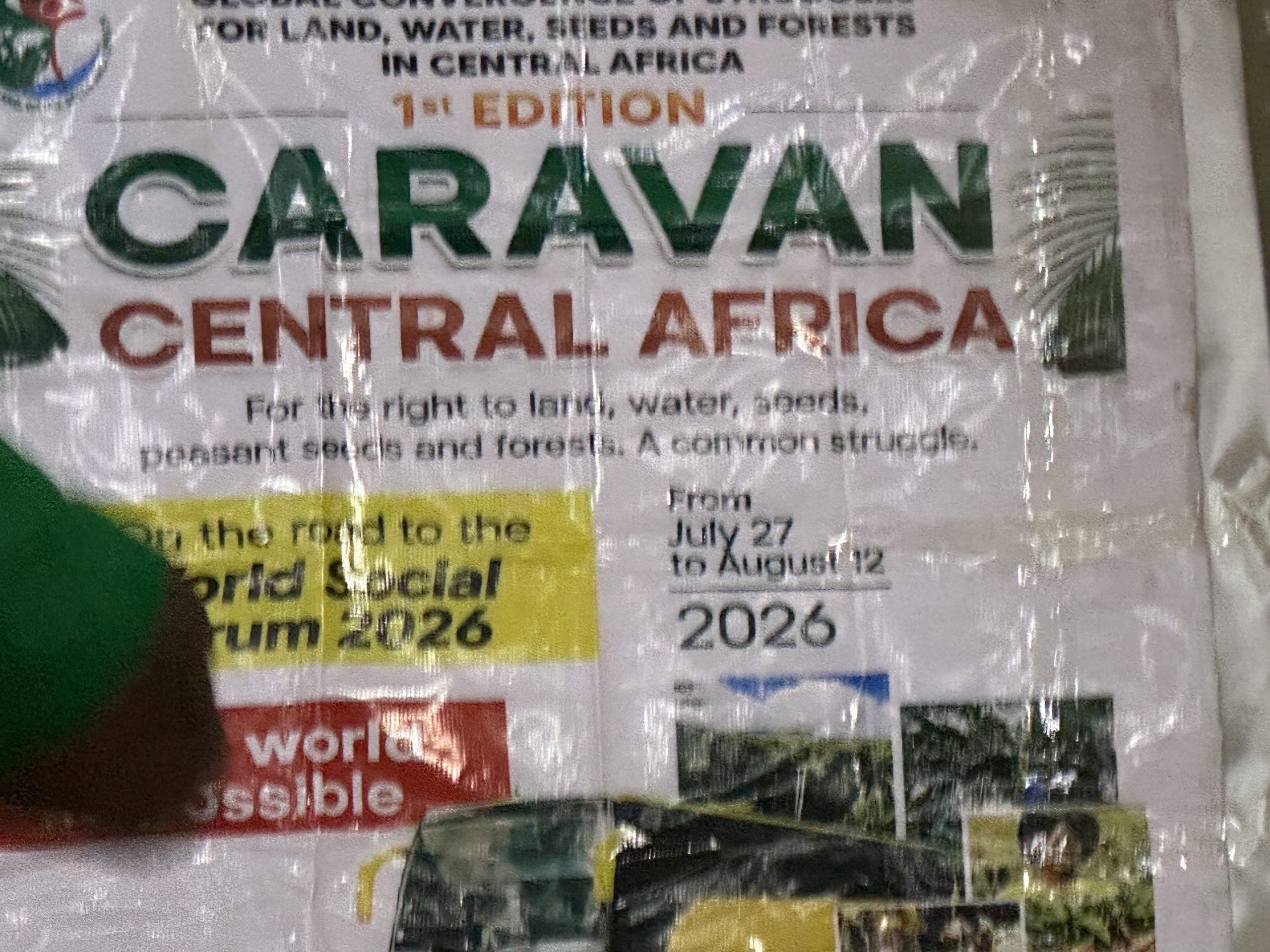
Despite efforts to reach a consensus, the Beninese authorities ultimately banned the WSF’s opening march, scheduled for 4 August, and denied access to the university campus where the activities were to take place. They prevented the display of banners and posters promoting the WSF. They also blocked several bus convoys (so called Caravan) at the borders; these had travelled from around fifteen countries in the region, bringing with them demands regarding the right to land and water.
On 3 August, upon their arrival at Cotonou Airport, two Scandinavian delegates – members of the WSF’s International Council – and a German delegate had been turned away. Their passports were confiscated, and they were forced to take a return flight to Europe via Addis Ababa. Their passports were only returned to them after their departure. According to the Haitian delegation, at least three Haitian delegates were subjected to the same treatment at Cotonou Airport. At least two Ugandan delegates were also sent back to Addis Ababa.
At the same time, the authorities hinted that they might ultimately authorize the WSF after all, by postponing the opening date by a few days. This policy of uncertainty played a major role in disrupting preparations for the forum and intimidating local organizations.
Nor were the people of Cotonou, or of Benin in general, informed or publicly invited to take part in the activities. The local media, particularly those controlled or heavily influenced by the authorities, made no mention of the WSF either before, during or after the event.
The aim: convergence of social movements
When the forum was finally authorized following a decision announced by the authorities on the evening of 5 August, barely 3,000 participants from over a hundred countries took part in various activities, some of which took place in venues outside the university. The authorities had thus partially achieved their aim of undermining the ‘convergence of social movements’ planned by the organizers.
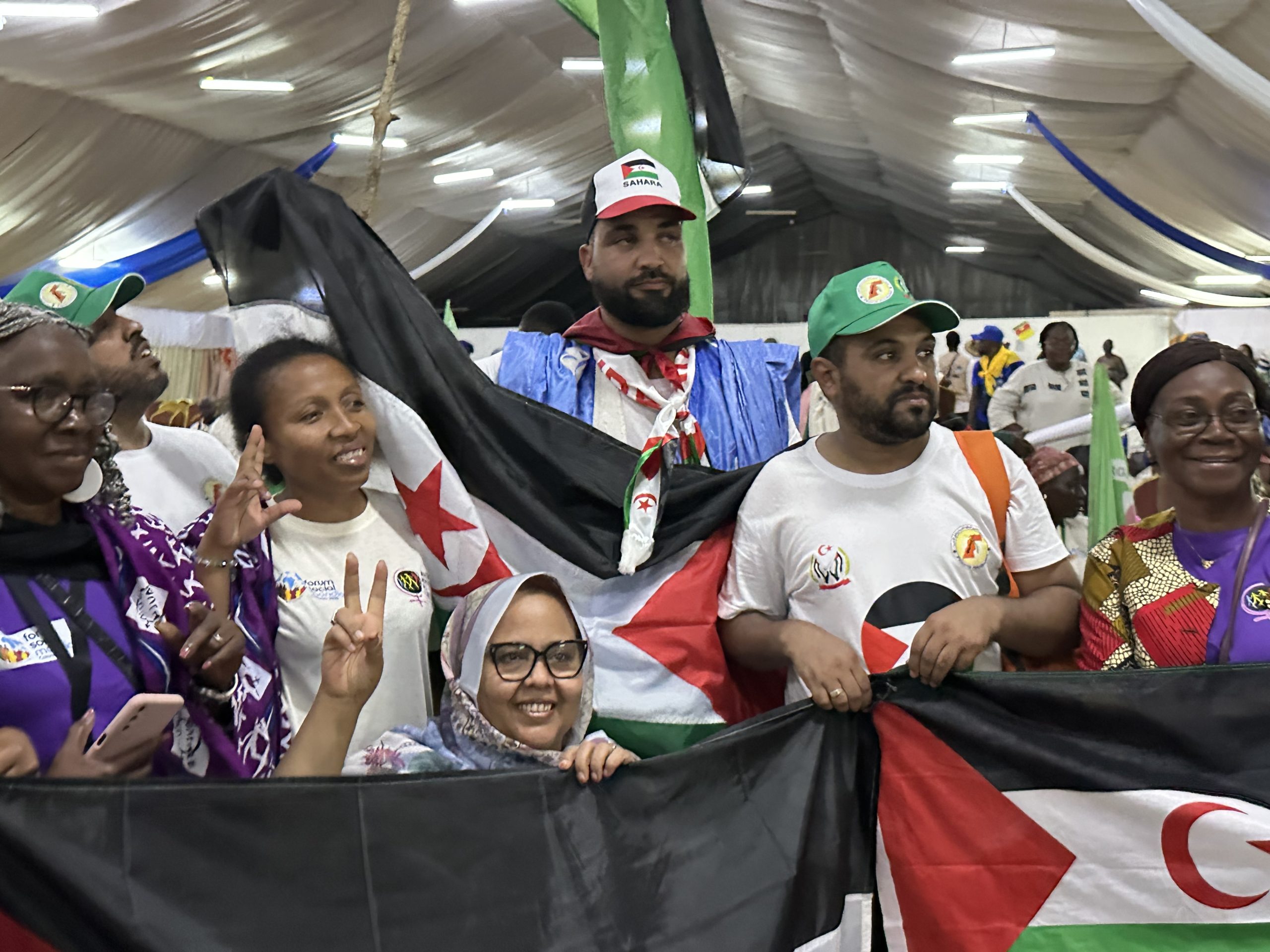
After protracted negotiations and bureaucratic hurdles, the caravans – which had by then dwindled from a few thousand people to 400 participants – were also allowed to enter Cotonou, where they were given a rapturous welcome by a cheering crowd and celebrated as heroes. Among their demands for free access to their communal land and water sources – which had already been severely reduced due to climate change – they emphasized above all the demand for food sovereignty and the cancellation of illegitimate debts owed to transnational corporations. The obstacles they encountered also reflect the restrictions imposed by the authorities in various African countries on freedom of movement within Africa.
The ‘Grands Débats’: an attempt to build bridges
Despite these difficulties, several hundred events on a wide range of topics were held. However, as there was a lack of genuine efforts to coordinate events on related topics, it was very difficult to link them together. Only three so-called ‘Grands Débats’ (major debates), attended by a considerable number of participants and organized by member organizations of the WSF International Council, were able to partially achieve the objective set out in the preparations for this forum, namely to promote convergence between the peace – , environmental, trade union, women’s and human rights movements.
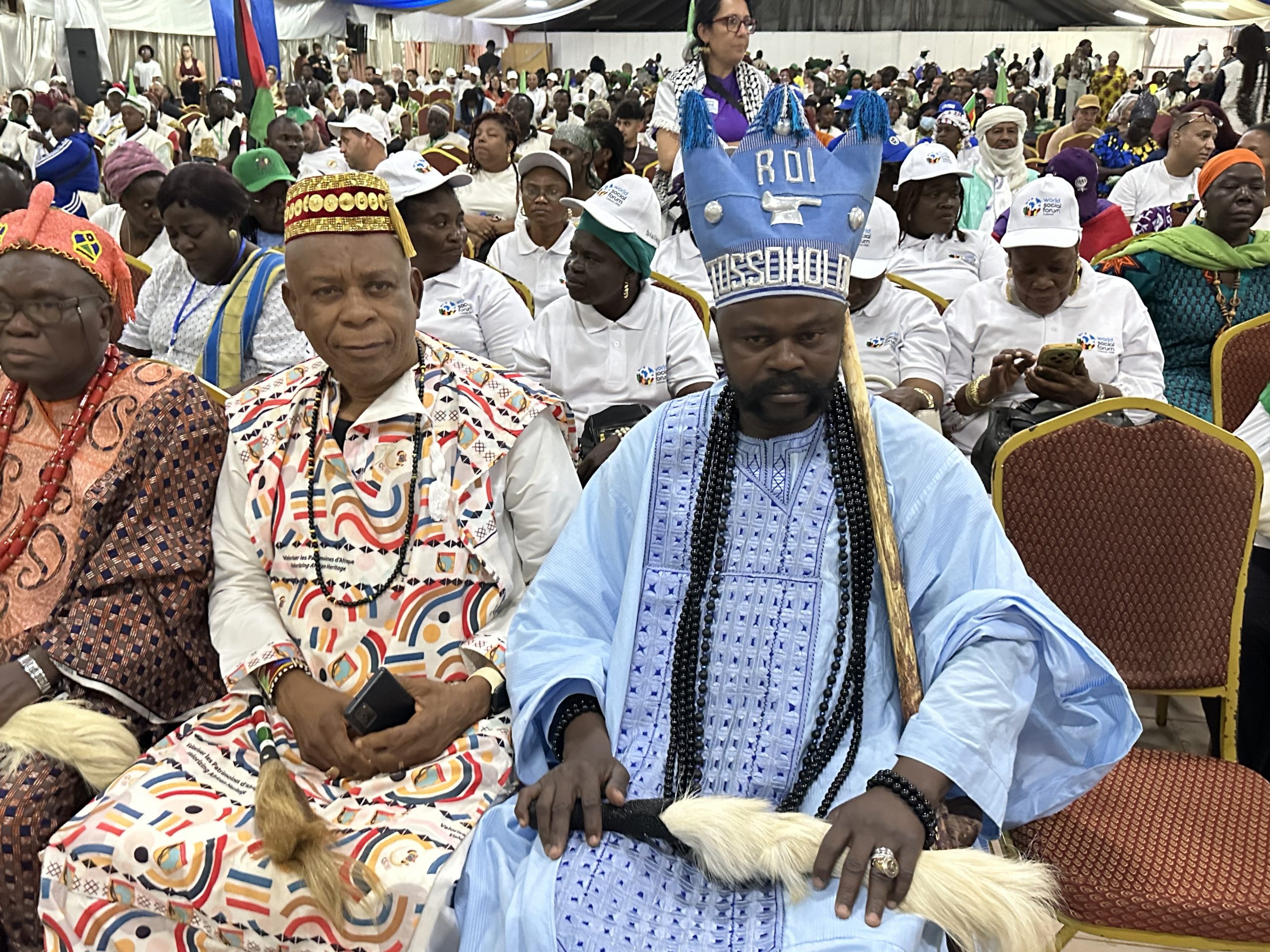
The latter had already become apparent during the preparations for this year’s WSF, with the proposal from the North centering primarily on ‘peace, demilitarization and the right of peoples to self-determination’ (Grand Debate 2), whilst in African and South-West Asian countries such as India, the struggle for ‘decolonization, land, water and food sovereignty’ (Grand Debate 1) took the central stage. Interestingly, these processes also revealed a growing bridge between the movements in the Global North and those in the Global South, which manifested itself in culturally distinct ways. Thus, in their HELSINKI+50 process, movements in Northern Europe emphasized ‘Peace on Earth and Peace with Earth’, and the trade unions ‘Welfare, not Warfare’, whilst in Benin itself, as well as in India, the focus was based on a concept of participatory democracy practiced by indigenous cultures.
All these demands were also accompanied by constant affirmations of mutual solidarity, especially with the people of Palestine, Cuba and the Sudan.
In short: this year’s World Social Forum in Benin, West Africa, will go down in history – not as the largest, but nonetheless as an important WSF – precisely because of the great tensions between governments and civil society reflecting the roots of humanity and draw lessons from them for future strategies and actions on a global scale.
(*) Dr Leo Gabriel is a journalist, documentary filmmaker and social anthropologist from Vienna and a founding member of the World Social Forum, of whose International Council he remains a member to this day.