JAN 19, 2026
Syrian forces overrun ISIS prison as SDF condemns US inaction
The US-backed Kurdish militia has accused Washington’s military coalition of ignoring SDF calls for assistance amid a Syrian army assault on the north
The Syrian Democratic Forces (SDF) said on 19 January that Damascus has continued to attack its positions across northern Syria despite the US-backed ceasefire reached a day earlier, warning that attacks are targeting the vicinity of SDF-run prisons holding tens of thousands of jailed ISIS militants.
Syrian Government troops tear down a Women’s Protection Units (YPJ) (Kurdish women forces) statue in the NE of #Syria.
This is the end of the autonomous Kurdish led region in Syria, which has existed for a decade. The US withdrew its support from the SDF and Kurds. pic.twitter.com/GvzFitQwp5
— Joshua Landis (@joshua_landis) January 18, 2026
This poses an “extremely dangerous” security threat, the SDF warned.
🇸🇾🇮🇶 ISIS members in Syria are now outside prison facilities and close to the Iraqi border, as per Iraqi sources.
SDF Statement:
“For the past three days, our forces have been coordinating with the so-called International Coalition to transfer ISIS detainees held at al-Aqatan… pic.twitter.com/Yg3Koynltm
— DD Geopolitics (@DD_Geopolitics) January 19, 2026
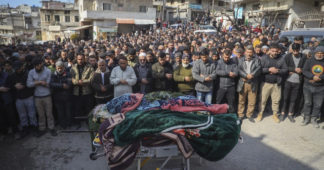
“Since the early hours of this morning, Al-Shaddadi Prison, which holds thousands of detainees from the terrorist organization ISIS, has been subjected to repeated attacks carried out by factions affiliated with Damascus. Fighters of the SDF confronted these attacks and succeeded in repelling them several times, resulting in the martyrdom of dozens of our fighters and the injury of others, in an effort to prevent a serious security catastrophe,” it said.
“Al-Shaddadi Prison is located approximately two kilometers from the US International Coalition base in the area. The US base did not intervene, despite repeated calls for intervention … Al-Shaddadi Prison has currently fallen outside the control of our forces,” it added.
“Despite the declared ceasefire agreement and the official statements issued in this regard, factions affiliated with the Damascus government continue their attacks on our forces in Ain Issa, Al-Shaddadi, and Raqqa,” the Kurdish group said earlier.
The group had also warned that the vicinity of Al-Aqtan Prison in Raqqa is also witnessing “fierce clashes” between SDF fighters and forces affiliated with the Syrian state.
“We affirm to public opinion that the level of threat is escalating significantly, amid attempts by these factions to reach the prison and seize control of it. Such actions could lead to serious security repercussions that threaten stability and open the door to a return of chaos and terrorism,” the SDF went on to say.
The SDF said it has been coordinating with the coalition for days on the transfer of ISIS prisoners to secure locations, but “the coalition has not taken any practical steps in this regard so far.”
🚨🇸🇾 SYRIA’S KURDS JUST GOT SOLD OUT, AND THE U.S. WATCHED IT HAPPEN
The SDF signed a deal with Damascus that’s basically a surrender. Oil fields, dams, border crossings, ISIS prisons, their semi-autonomous region… all handed over.
Kurdish fighters don’t even integrate as… pic.twitter.com/XVAfC5EiBx
— Mario Nawfal (@MarioNawfal) January 19, 2026
Unconfirmed reports and videos on social media say that Syrian troops are freeing prisoners from SDF-run detention centers holding ISIS militants.
🇸🇾 Total chaos in Syria. Circulating footage of thousands of ISIS terrorists and their family fleeing from the Al-Hol camp in the Hasakah countryside after attacks by Jolani’s gangs on areas controlled by the SDF.
This is near the Iraqi border. pic.twitter.com/5sVcQeUddX
— Sprinter Press (@SprinterPress) January 19, 2026
VIDEO | Footage is emerging from Syria showing govenrment-affiliated forces freeing prisoners from several prisons in the Raqqa countryside after seizing them from the Syrian Democratic Forces (SDF).
It is reported that those released include a large number of former ISIS… pic.twitter.com/5P3J0ODMeo
— The Cradle (@TheCradleMedia) January 18, 2026
“Taking up arms is a public duty. It is a national and moral responsibility to protect our people and safeguard the achievements of our revolution, as well as to strengthen the spirit of resistance. We support a political solution, but true peace cannot be achieved without self-defense. If war is imposed on us, or if the existence and rights of our people are targeted, we are fully prepared for legitimate defense,” the statement said.
Government forces moved into Aleppo’s Tishreen Dam area on Monday as SDF fighters withdrew.
The northeastern city of Hasakah remains under Kurdish control.
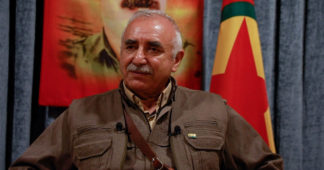
A commander in the People’s Protection Units (YPG) – the Syrian branch of the Kurdistan Workers Party (PKK) that makes up a significant bulk of the SDF fighting force – has called on Washington to “forcefully intervene” on behalf of the Kurdish militia.
“Our greatest hope is that there will be a tangible outcome, especially from the coalition and the United States, meaning that they will intervene more forcefully in the existing problems than what they are currently doing,” said YPG commander Sipan Hamo.
“In the current situation and the chaos we are living in, the only ones who can offer guarantees are the United States or the coalition. We believe that the responsibility for everything currently happening inside Syria lies with the western countries, and especially the US,” he added.
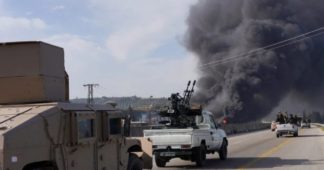
The Syrian army swept across north and east Syria on 18 January, seizing the country’s largest oil fields, which have been under SDF-US army control for years. Syrian troops also moved into the northern cities of Tabqa and Raqqa.
The escalation followed recent battles between the two sides in Aleppo and its countryside.
On Sunday, Syrian state media announced an immediate US-backed ceasefire deal, after Washington called on both sides to quickly resolve the conflict.
Key points of the ceasefire agreement include the handover of Deir Ezzor and Raqqa governorates, as well as all border crossings, oil fields, and gas fields in the region to the Syrian government.
It also reiterates demands for the complete integration of all SDF military and security personnel into the structures of the Syrian Ministries of Defense and Interior on an individual basis, rather than as Kurdish-commanded units.
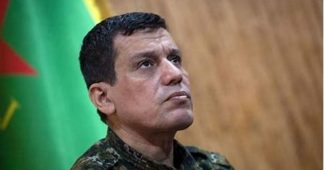
SDF chief Mazloum Abdi said on Sunday that he agreed to the deal and withdrew from Raqqa and Deir Ezzor to “stop bloodshed” and avoid a civil war.
Over the weekend, the US called on Damascus to end its assault on Kurdish-held areas, despite also fully backing the Syrian demand for SDF integration.
The Syrian government and the SDF signed an agreement in March aimed at integrating the Kurdish group into Damascus’s forces.
Both sides have been in disagreement about the deal’s implementation – particularly the SDF’s wish to remain under Kurdish command and enter the army as a bloc rather than dissolve and conscript, as Damascus is demanding.
The Kurdish group has also insisted on a decentralized system that would allow it a degree of autonomy in north and east Syria, as has been the case in recent years.
As a result, clashes have intermittently broken out between government forces and the SDF over the past several months, with both repeatedly accusing each other of obstructing the March agreement.
The SDF was formed by the US-led military coalition in Syria in 2015, and has since helped Washington oversee its occupation of Syrian oil fields.
The latest tensions follow a significant reduction in the US military presence in Syria in recent months. Washington has left five of eight major bases in the country.
.
We remind our readers that publication of articles on our site does not mean that we agree with what is written. Our policy is to publish anything which we consider of interest, so as to assist our readers in forming their opinions. Sometimes we even publish articles with which we totally disagree, since we believe it is important for our readers to be informed on as wide a spectrum of views as possible.