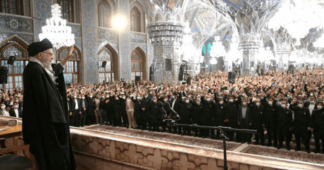
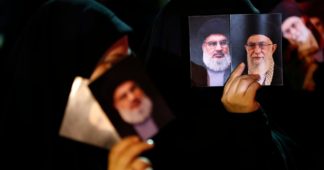
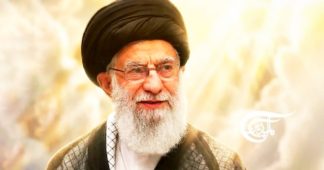
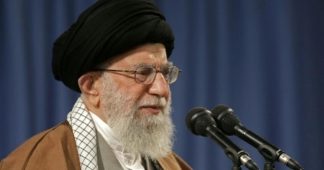
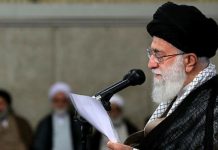
The Leader of the Islamic Revolution and the Supreme Authority of the Islamic Republic of Iran, Ayatollah Sayyid Ali Khamenei, has been martyred.
Mar 1, 2026
The Foundations of a Stoic Life
Ali Jawad Husseini Khamenei was born on July 15, 1939 (with some records citing April), in the holy city of Mashhad, the second of eight children. His lineage was one of profound religious scholarship; his father, Sayyid Javad Khamenei, was a devout, ascetic scholar of Azeri-Turkish descent, and his mother, Khadijeh Mirdamadi, was a hafiza (memorizer) of the Holy Quran and a descendant of the renowned Safavid-era scholar Mir Damad.
Despite his noble scholarly lineage, Khamenei’s childhood was defined by a poverty that shaped his lifelong worldview. In his memoirs, he described a life of “bitter hardship” in a 70-square-meter house consisting of a single room and a dark basement. He recalled nights where there was no food to be found, and his mother would painstakingly sew clothes for him and his brothers from his father’s old, discarded garments. This early exposure to the struggles of the “Mostazafin” (the oppressed) became the cornerstone of his political identity.
The Intellectual and Spiritual Journey
Khamenei’s education began at age four in a traditional Maktab, where he began memorizing the Quran. His father and the renowned scholar Jalil Husseini Sistani were his first tutors. After completing his primary education in Mashhad, he moved to the prestigious seminaries of Najaf in 1958, studying under masters like Mohsen al-Hakim and Abu al-Qasim al-Khoei.
However, it was his move to Qum in 1959 that defined his destiny. There, he became the devoted pupil of Ayatollah Ruhollah Khomeini. Khamenei did not merely study jurisprudence under Khomeini; he absorbed his revolutionary philosophy of Wilayat al-Faqih (Guardianship of the Jurist).
Beyond the seminary, Khamenei was a man of the world. He was a polyglot—fluent in Persian, Arabic, and Azeri—and possessed a deep love for literature. He was a noted critic of poetry and a regular at literary circles, maintaining a lifelong friendship with the legendary Iraqi poet Muhammad Mahdi al-Jawahiri. His intellectual breadth was further evidenced by his translation of the works of the Egyptian thinker Sayyid Qutb, which he saw as a bridge between the Shia and Sunni revolutionary spirits.
The Fire of Resistance
From the early 1960s, Khamenei was a central pillar of the anti-Pahlavi movement. His revolutionary activities made him a constant target of the Shah’s secret police, the SAVAK. Between 1962 and 1977, he was arrested six times and subjected to brutal interrogations. In 1977, he was exiled to the remote city of Iranshahr in Sistan and Baluchestan, an experience that only hardened his resolve.
Khamenei was a man of action as much as intellect. During the 1979 Revolution, he was a key negotiator during the U.S. Embassy hostage crisis and a founding member of the Revolutionary Council. Perhaps his most iconic moment of sacrifice occurred on June 26, 1981, when a bomb hidden in a tape recorder by the Mujahedin-e-Khalq (MEK) exploded while he was delivering a sermon. He survived the attempt, but his right arm was permanently paralyzed—a “living martyrdom” that he bore with quiet dignity for the next 45 years.
Leading Through the Storm
Khamenei served as the third President of the Islamic Republic from 1981 to 1989, a period dominated by the grueling eight-year war with Iraq. He was frequently seen on the front lines in Ahvaz, wearing his clerical robes and an olive-drab military jacket, boosting the morale of the volunteer Basij forces.
Upon the death of Imam Khomeini in 1989, the Assembly of Experts chose Khamenei as the Supreme Leader. While Khomeini was the visionary who sparked the fire of the Revolution, it was Khamenei who served as the architect who ensured the flame did not flicker out. For 37 years, he navigated the Iranian state through a labyrinth of international sanctions, regional wars, and internal pressures. He transformed Iran into the central hub of the “Axis of Resistance,” providing the strategic depth that empowered movements across Lebanon, Palestine, Iraq, and Yemen.
A Legacy of Sovereignty and Sacrifice
Under his guidance, Iran pursued a policy of “Strategic Patience” and “Heroic Flexibility,” always prioritizing national sovereignty and the dignity of the Islamic world over Western integration. He was a fierce advocate for scientific advancement, overseeing Iran’s nuclear and satellite programs, which he viewed as essential for the independence of the “Global South.”
Despite the immense power he held, those close to him testified that he never abandoned the asceticism of his youth. He lived a life far removed from the opulence typically associated with heads of state, preferring simple meals and the company of scholars and the families of martyrs.
The Final Chapter
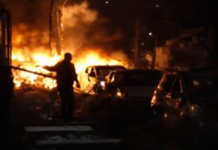
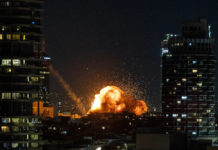
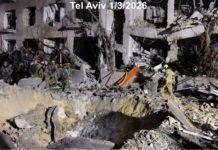
On February 28, 2026, the long-standing shadow war between Iran and the US-Israeli alliance reached a fever pitch. In a massive aerial operation targeting leadership facilities across Iran, the site housing the Supreme Leader was struck.
While American and Israeli officials, including President Donald Trump and Prime Minister Benjamin Netanyahu, were quick to claim a tactical victory, the Iranian people viewed the event through the lens of faith: as the ultimate “Martyrdom” (Shahadat) of a leader who had spent 86 years preparing for this meeting with the Divine – his spiritual message for many years.
We remind our readers that publication of articles on our site does not mean that we agree with what is written. Our policy is to publish anything which we consider of interest, so as to assist our readers in forming their opinions. Sometimes we even publish articles with which we totally disagree, since we believe it is important for our readers to be informed on as wide a spectrum of views as possible.