Developments in Venezuela and International Law
“It must be recalled that it is precisely smaller states that depend most critically on the invocation and effective application of International Law, as a counterweight to the military superiority of their neighbors”
“The fact is in itself more than worrying and sets back the hope for world peace by decades,” the Union stressed in a statement.
ATHENS COURT OF FIRST INSTANCE
(former Evelpidon School)
Building 6 – Office 210
Tel.: +30 213 215 6114
E-mail: endikeis@otenet.gr
Athens, 7 January 2026
Ref. No.: 3
Following the conclusion of the Second World War, the international community undertook a solemn commitment not to repeat the errors of the past. This commitment was expressed through the obligation to settle disputes in accordance with the principles and rules of International Law, the establishment of the United Nations and international judicial institutions, and the duty to respect and comply with their decisions. Although the principle of sovereign equality of states constituted a long-standing historical demand, the early post-war period of international reconstruction was, in general, characterized by efforts to achieve compromise and consensus, as well as by a minimal but tangible respect for international legal norms.
In recent years, however, the escalation of economic competition among the most powerful states, the global economic downturn, the pursuit of access to new markets, and the prospect of exploiting the natural resources of smaller states have resulted in the progressive erosion of International Law. This erosion has been accompanied by the substitution of legal norms with political expediency and cynicism, and by the reassertion of the principle that power—specifically military power—constitutes the ultimate source of law.
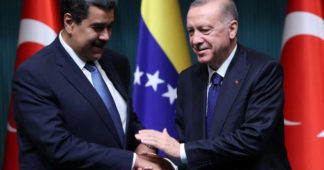
The systematic undermining of the judicial function, as evidenced by the public denunciations by the President of the United States against judges of the International Criminal Court and the imposition of sanctions against them—measures already condemned by the United Nations—constituted a precursor to the recent intervention of the United States in Venezuela and the abduction of the country’s President. These actions were further compounded by explicit threats directed against other states that fail to conform to the strategic preferences of the prevailing global superpower.
While these developments are, in themselves, profoundly alarming and represent a regression of several decades in the collective aspiration for international peace, the apparent inability or unwillingness of developed states to unequivocally denounce such conduct renders the contemporary legal environment even more troubling, both at the national level and within the European Union more broadly.
This concern is grounded in the fact that the consequences arising from the absolute relativization of the normative value of legal rules, together with the consolidation of the perception that the only effectively applicable law is the law of the strongest, will be irreversible. It must be recalled that it is precisely smaller states that depend most critically on the invocation and effective application of International Law, as a counterweight to the military superiority of their neighbors.
FROM THE PRESS OFFICE