The US-Israeli strategy against Iran is working. Here is why
Every aspect of Iran’s ability to project regional power is being successfully degraded.
By Muhanad Seloom
Mar16, 2026
Two weeks into Operation Epic Fury, the dominant narrative has settled into a comfortable groove: The United States and Israel stumbled into a war without a plan. Iran is retaliating across the region. Oil prices are surging, and the world is facing another Middle Eastern quagmire. US senators have called it a blunder. Cable news has tallied the crises. Commentators have warned of a long war.
The chorus is loud and, in some respects, understandable. War is ugly, and this one has imposed real costs on millions of people across the Middle East, including the city I live in.
But this narrative is wrong. Not because the costs are imaginary, but because the critics are measuring the wrong things. They are cataloguing the price of the campaign while ignoring the strategic ledger.
When you look at what has actually happened to Iran’s principal instruments of power – its ballistic missile arsenal, its nuclear infrastructure, its air defences, its navy and its proxy command architecture – the picture is not one of US failure. It is one of systematic, phased degradation of a threat that previous administrations allowed to grow for four decades.
I write this from Doha, where Iranian missiles have triggered alerts for residents to take shelter and Qatar Airways has started operating evacuation flights. I lived through four years of war in Baghdad.
I have worked for the US Department of State and advised defence and intelligence agencies in multiple countries. I have no interest in cheerleading for war
But I have spent my academic career studying how states authorise the use of force through intelligence institutions, and what I see in the current campaign is a recognisable military operation proceeding through identifiable phases against an adversary whose capacity to project power is collapsing in real time.
An arsenal built over decades, dismantled in days
Iranian ballistic missile launches have fallen by more than 90 percent from 350 on February 28 to roughly 25 by March 14, according to publicly available data. Drone launches tell the same story: from more than 800 on Day 1 to about 75 on Day 15.
The figures drawn from US and Iranian military statements differ in detail but converge on the trajectory. Hundreds of Iranian missile launchers have been rendered inoperable. According to some reports, 80 percent of Iran’s capacity to strike Israel has been eliminated.
Iran’s naval assets, fast-attack craft, midget submarines and mine-laying capabilities are being liquidated. Its air defences have been suppressed to the point at which the US is now flying nonstealth B-1 bombers over Iranian airspace, a decision that signals near-total confidence in air dominance.
The campaign has moved through two distinct phases. The first suppressed Iran’s air defences, decapitated its command and control, and degraded its missile and drone launch infrastructure. By March 2, US Central Command announced local air superiority over western Iran and Tehran, achieved without the confirmed loss of a single American or Israeli combat aircraft.
The second phase, now under way, targets Iran’s defence industrial base: missile production facilities, dual-use research centres and the underground complexes where remaining stockpiles are stored. This is not aimless bombing. It is a methodical campaign to ensure that what has been destroyed cannot be rebuilt.
Iran now faces a strategic dilemma that tightens every day. If it fires its remaining missiles, it exposes launchers that are promptly destroyed. If it conserves them, it forfeits the ability to impose costs of the war. Missile and drone launch data suggest Iran is rationing its remaining capacity for politically timed salvoes rather than sustaining operational tempo.
This is a force managing decline, not projecting strength.
The nuclear threshold that previous US presidents accepted
Much of the criticism of the US-Israeli campaign focuses on its costs while treating the status quo ante as if it were cost-free. It was not.
Iran entered 2026 with 440kg of uranium enriched to 60 percent purity – enough, if further enriched, for as many as 10 nuclear weapons. Before the June strikes, Tehran was less than two weeks away from enriching enough uranium for one nuclear bomb, according to US intelligence assessments. At that time, the International Atomic Energy Agency acknowledged that Iran’s accumulation of near-weapons-grade material had no clear civilian justification
The current campaign has damaged further the Natanz nuclear facility. The one in Fordow remains inoperable. The defence industrial facilities that would be needed to reconstitute enrichment capacity are being systematically targeted.
Reasonable people can disagree about whether diplomatic alternatives were fully exhausted, the Omani-mediated negotiations in February showed real progress, and there are legitimate questions about whether Washington walked away too soon.
But the critics’ implicit alternative, continued restraint while Iran inched towards a nuclear weapon, is the policy that produced the crisis in the first place. Every year of strategic patience added centrifuges to the enrichment halls and kilogrammes to the stockpile.
Continue reading at www.aljazeera.com
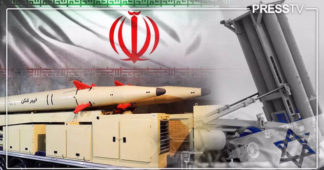 Defending the Skies: How THAAD and Arrow-3 Protect…
 US Surging Military Assets To the Middle East To…
 Pentagon Prepares for Possibility That Iran War Will…
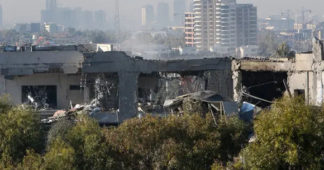 Iran Launches Ballistic Missile Strikes in Iraq and Syria
 Israeli army chief expects US attack on Iran ‘within…
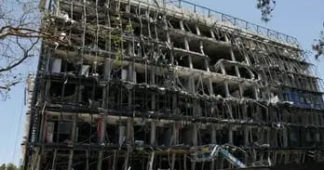 Iranian missile strikes Israel’s ‘crown…