By Marwan Emil Toubassi
Apr 1, 2026
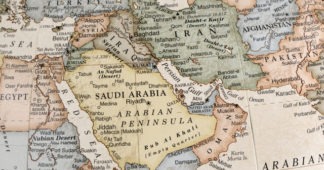
The American decision to engage in the recent escalation was neither incidental nor detached from a deep awareness of its consequences—particularly on the global economy and energy prices. The United States, with its vast institutional expertise, fully understands that any tension in the Middle East—even within the framework of its strategic partnership with Israel—will directly impact oil and gas markets, global economic stability, and even the American domestic scene, where protests have already begun to emerge.
Yet, despite this awareness, Washington has chosen this path, even as some of its allies grow more distant and internal voices opposing the war and Trump-era policies become increasingly vocal.
This raises a fundamental question: why would Washington make a decision that appears economically and politically costly to its own hegemony?
The answer, in my view, lies in the fact that American decision-making is no longer governed solely by immediate cost-benefit calculations. Rather, it is shaped by a broader perspective tied to managing its position within the international system. The United States, which led the world under a unipolar order for decades, now faces profound transformations—with the rise of major powers such as China, the reassertion of Russia on the global stage, and the growing influence of regional actors capable of imposing new equations, as is the case with Iran.
Within this context, the American escalation can be understood as an attempt to reassert deterrence and prevent its adversaries from expanding their strategic space and strengthening their own deterrent capabilities. The issue is not merely a reaction to a specific event, but rather a strategic message to the world: that Washington remains capable of intervention and committed to protecting Israel, and that it will not allow the balance of power to be reshaped beyond its will.
However, this behavior reveals a striking paradox. The excessive reliance on brute force—particularly at a time when other powers’ deterrence capabilities are becoming more visible—does not necessarily reflect the peak of hegemony. On the contrary, it may signal growing anxiety over its erosion. When a superpower increasingly resorts to military tools, despite their high cost and uncertain outcomes, it suggests a decline in the effectiveness of its other instruments—whether economic, political, or even symbolic.
The world has changed. Sanctions alone are no longer sufficient to subdue states. Western alliances are no longer as cohesive as they once were, with some allies—such as certain European and Gulf countries—adopting more independent positions driven by their own national interests. At the same time, global public opinion has become more skeptical of American policies and less willing to accept its narratives without scrutiny, as Israel itself faces increasing isolation due to its repeated violations.
Domestically, deep political polarization within the United States, mounting economic pressures, and declining trust in institutions all weigh heavily on decision-makers in the White House, limiting their ability to sustain prolonged or open-ended conflicts. Yet paradoxically, these very pressures may push some circles within the decision-making establishment toward more assertive external policies, in an attempt to compensate for internal erosion or to reconstruct an image of strength.
Thus, what we are witnessing today is not the complete end of American hegemony, but rather a complex transitional phase in which Washington is attempting to manage a relative decline in its ability to unilaterally control the international system. It is a moment where the desire to maintain leadership collides with a new reality that imposes limits on that leadership.
The most dangerous aspect of this phase is not merely the rising cost of wars or the volatility of energy markets, but the possibility that policies aimed at “preventing decline” may themselves become a permanent source of global instability. When power is used to delay historical transformation rather than adapt to it, the entire world is drawn into a state of prolonged tension.
In conclusion, the United States does not appear to be engaging in these confrontations from a position of absolute strength, but rather from one of anxious power—aware that the era in which it stood as the sole dominant actor is beginning to shift. Between the attempt to preserve hegemony and the necessity of acknowledging ongoing global transformations, contradictory policies emerge, pushing the world toward greater uncertainty and instability.
It is, in essence, a moment of “managing decline”—not the end of power, but certainly the end of uncontested hegemony for the United States and its strategic ally, Israel.
.
We remind our readers that publication of articles on our site does not mean that we agree with what is written. Our policy is to publish anything which we consider of interest, so as to assist our readers in forming their opinions. Sometimes we even publish articles with which we totally disagree, since we believe it is important for our readers to be informed on as wide a spectrum of views as possible.