Jacqueline Rose and the politics of motherhood
By Merve Emre
May 3, 2018
I started Jacqueline Rose’s book Mothers: An Essay on Love and Cruelty on a winter afternoon when my children were sick. To keep misery at bay, I allowed my older son to watch Peter Pan, and while he was instantly absorbed in the adventures of Peter and the Lost Boys, I found myself distracted by the tragedy of Wendy Darling. Here was a bright, imaginative girl conscripted into playing mother to a vile little boy, a boy who seems to take great pleasure in pitting her against the sexier, more adventurous women in his life. Wendy is attacked by Tinker Bell, nearly drowned by the mermaids, cast aside for Tiger Lily. She is told that she talks too much, that she is a “big, ugly girl.” Each time she is insulted or hurt or almost dies, Peter laughs—a maniacal, braying laugh; the laugh of an idiot and sadist. But Wendy rarely complains or lashes out. Instead, she sings one of the sweetest, most pious songs about motherhood ever written: “Ask your heart to tell you her worth / Your heart will say, ‘Heaven on earth’ / Another word for divine / Your mother and mine.”
As I watched the movie, growing increasingly horrified by the spectacle of Wendy’s vulnerability and devotion, I began to feel the great urgency of the two questions that guide Rose’s Mothers: What is it about mothers that provokes hostility, abuse, and exploitation? And why, in the face of their bad treatment, do mothers continue to hold themselves to impossible standards of goodness and love? For Rose, the answer lies less in unequal laws (as it would for liberal feminists) or in capitalist relations (as it would for socialist feminists) than in the murkier, more intimate realm of the unconscious. The idea of motherhood operates as a kind of collective projection, an imaginary order that shapes our perspective of the kind of person a mother ought to be. Motherhood, Rose explains, is “the place in our culture where we lodge, or rather bury, the reality of our own conflicts, of what it means to be fully human.”
As a literary scholar and psychoanalytic thinker, Rose has long insisted that we pay close attention to the subterranean fears, fantasies, and narratives that structure our most pressing sociopolitical problems: suicide bombings, honor killings, state-sanctioned terror. Her feminism takes its cues from this insight. Her previous book, the feminist treatise Women in Dark Times, called for a “scandalous feminism,” one that supplants pleas for equality and power with radical self-interrogation. If men and women are to fully realize their humanity, they need to be willing to go beyond the sanitized slogan that “the personal is political” and instead “enter the landscape of the night,” confronting “dark with dark.” One must meet certain fears head-on, unflinchingly, with passion and even pleasure: the fear of pain, the fear of abandonment, the fear of disintegration—of “dissolving margins,” as Elena Ferrante puts it in her writing on motherhood—and, ultimately, the fear of death.
These are fears intrinsic to human life in general, but in Mothers Rose argues that they are acutely part of the process of becoming a mother. Pregnancy is nothing if not an act of colonization, and every birth, no matter how glorious or empowering, is a harbinger of death. This is true in a very concrete sense for mothers. Childbirth is risky, and mothers are still left to die in hospitals, in prisons, and on the streets. But it is also true in a less tangible but still powerful way for the people who encounter mothers and their children out in the world and, on some unconscious level, feel unnerved by the radical act of creating another human life. “The fact of being born can act as an uncanny reminder that once upon a time you were not here, and one day you will be no more,” Rose observes. (When I informed an administrator at the university where I work that I was pregnant with my second child, he replied in a funereal tone, “May you gestate in peace.”)
For Rose, these innermost fears are the reason that mothers are “invariably the object of either too much attention or not enough.” Mothers are denied promotions, pressured to leave their jobs, or fired at appalling rates. They are cordoned off from public life so that the visceral realities of motherhood—the disfigured bodies, the breasts leaking milk, the endless streams of piss and shit that emanate from babies, the slaps and shrieks of dissatisfied toddlers—do not intrude upon the serious work of serious men. They are judged, shamed, and abused for the decisions they make, no matter how personal or inconsequential those decisions are. (Formula or breast milk? Disposable or cloth? Work full-time, part-time, or not at all?) On the rare occasions when mothers become an object of attention in the political sphere, Rose notes, they often do so as parasites (welfare mothers scamming the state, alien mothers seeking asylum) or perfectionists (white, wealthy neoliberal mothers who pride themselves on “leaning in” and “having it all”). To be a mother is to shuttle between extremes—altruism and narcissism, neediness and self-sufficiency, pride and abjection, love and hate—hounded by fear and self-doubt.
Among the many horrors of mothering under the patriarchy is that the image of the perfect mother—emotional, but not in excess; accomplished, but never to the detriment of her children’s well-being; stylish, but not too sexy—has made women into extremely effective agents of their own and each other’s oppression. Motherhood is “thick with idealisations,” Rose notes, many of which converge on a fantasy of maternal virtue predicated on total self-negation—the essence of cruelty. A mother must be everything for her child, which leaves very little room for her to be anything for herself.
A mother’s love is supposed to be unconditional, selfless, and pure, cleansed of the affects that pollute love between adults: boredom, jealousy, resentment, hatred. She is encouraged by pop culture and parenting guides to cleave to what Rose calls a “template of absolute singular devotion and blindness.” Her child is the most miraculous child in the world; there is nothing she would not do for him; he gives her life meaning—these are the lines she must utter with absolute clarity and conviction if she wants to play the role of the perfect mother; “the most wonderful person in the world,” as Wendy sang to the Lost Boys and my entranced toddler. Mothers bear the burdens of the world and the responsibility for setting things right.
Since the imaginary order of motherhood is essentially an elaborate fiction, Rose routes her argument about the perversions of maternal love through representations of abject or homicidal mothers in fiction. The archive she draws from is rich and varied, extending from the Greek tragedy of Medea to Edith Wharton’s The Mother’s Recompense, Roald Dahl’s Matilda, Toni Morrison’s Beloved, and Sindiwe Magona’s Living, Loving, and Lying Awake at Night. In each, we get stories featuring mothers whose incomprehensible treatment of their children reveals the corrupted ideals of motherhood: the possessiveness implicit in treating one’s child as a miracle; the resentment that can arise when one is expected to provide undiluted maternal affection and attention; the hardening of the heart when, despite her best efforts, a mother cannot protect her child from abuse, poverty, enslavement—when, as in Morrison’s Beloved, she “cannot secure the life of the child who is placed—sanctimoniously, thoughtlessly, mostly without material or practical support—in her total care.” There is a wonderful, meandering chapter dedicated to the novels of Ferrante, in which Rose argues that the books speak “from the depths” of the maternal womb with an unparalleled intensity, fear, and violence. Pregnancy, in them, is the “original dissolution of form”—not just the literal stretching and tearing of bodies, but the strange and sudden porousness of subjectivity one experiences upon assuming responsibility for another’s life.
What is true for fictional mothers seems true for real ones as well. “What woman has not dreamed of ‘going over the edge’?” asks Adrienne Rich in Of Woman Born—a book Rose returns to time and again in Mothers to stress the ordinariness of motherhood’s ugly impulses. Most mothers do not abandon or murder their children, but every single one has the potential to be impatient, exasperated, unkind. This does not make mothers who act on these feelings bad people. They are simply women subject to impossible, unrelenting demands; women who often receive little or no support or understanding from a society that believes it is in their nature to love and care, to be fruitful and multiply.\
Reading these sections of Mothers, I recalled the many experiences I had forgotten (or repressed) just to perform the day-to-day work of mothering. The awesomeness of creation, followed by the terror of responsibility. The distress of feeding or swaddling or stimulating my children “the wrong way,” according to some arbitrary book or website; the pride and pleasure and self-righteousness of doing it “right.” The rage I sometimes felt when I sat down at the end of the day, exhausted, and was forced to acknowledge that my life was no longer my own—a rage that was immediately checked by long bouts of self-recrimination, then sublimated into a series of perfectly posed photographs of my children, beautiful and happy and utterly oblivious to my distress. I was grateful to Rose for giving voice to these conflicted realities, for inviting her reader to acknowledge them without fear or shame. It struck me that she had positioned herself as a mother to mothers, ready to soothe all of us who felt like we were constantly failing.
One of the cruelest ironies of motherhood is that the harder it becomes to sustain the ideal of maternal perfection, the more women feel—and are made to feel—beholden to it. “As austerity and inequality increase across the globe,” and as “more and more children are falling into poverty,” Rose explains, the “focus on mothers is a sure-fire diversionary tactic, not least because it so effectively deflects from what might be far more disruptive forms of social critique.” For Rose, the failures of mothers become legible as the failures of society at large, placing motherhood at the heart of contemporary debates over immigration policy and ethno-nationalism, racism and police brutality, and the future of the welfare state in the United States and United Kingdom.
There is something oddly conspiratorial about Rose’s tone when she starts talking about politics. “Because mothers are seen as our point of entry into the world,” she insists, “there is nothing easier than to make social deterioration look like something which it is the sacred duty of mothers to prevent.” The exaggerated language of blame that Rose attributes to unreal actors—those shadowy entities using mothers as a “sure-fire diversionary tactic” from more “disruptive forms of social critique”—only further deflects from the larger question of why austerity has made mothering harder than before. It is because austerity policies have shifted nearly all the burdens of social reproduction from the state onto families, making them wholly responsible for feeding, clothing, educating, and caring for their children, that mothers are blamed for the persistence of problems that previously were not exclusively theirs to solve. Rose does, at times, acknowledge this. But her larger project fails to emphasize that this has nothing to do with the primal fears or fantasies of individuals. It is a social and historical failure—a dimension of caregiving that Rose’s analysis largely sidesteps, yielding some sweeping (and incorrect) claims about the politics of motherhood.
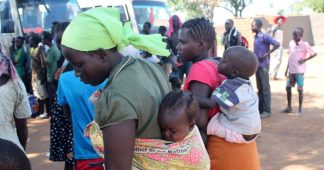
It is in the realm of politics that we find mothers whose vulnerability has provoked extraordinary vitriol. Take Rose’s example of mothers like Bimbo Ayelabola, the Nigerian migrant who gave birth to quintuplets at a cost of up to £200,000 to the National Health Service (according to the right-wing UK newspaper The Sun); or the absent mothers of Eritrea, Somalia, and Syria, whose children have been left to die in refugee camps after the British government has refused their applications for asylum. We also find mothers whose private suffering has spurred them to great acts of strength: the Mothers of the Plaza de Mayo in Argentina, whose children disappeared during the country’s military dictatorship and who have never stopped looking for their children; Gwen Carr, the mother of Eric Garner. It’s a heartbreaking list, and it raises one of the cruelest and most politically crucial questions of all: What are the added burdens of a mother whose sons and daughters, because of their race, their class, their ethnicity, their country of origin, have a greater chance of becoming the victims of state violence?
One could fill a book with answers to this question alone, with the stories of migrant mothers forced to leave their children in war zones; the Mothers of the Movement, a coalition of black women whose children have been killed by the police; MomsRising, a group of mothers who draw attention to children who have been swept up in ICE raids. However, even as Rose moves from the personal to the political, her focal point remains what she believes lies beneath the shifting political tides: a primal fear of mothers that surfaces everywhere all at once. In Rose’s view, the failure of specific institutional arrangements to protect black mothers, refugee mothers, and poor mothers, as well as their children, comes to stand in for an indefinite, unconscious impulse in contemporary society to “scapegoat” all mothers for “everything that is wrong with the world.” “It is a perfect atmosphere for picking on mothers, for branding them as uniquely responsible for both securing and jeopardizing this impossible future,” she writes, though she does not tell us who is doing the branding or why.
As she scales from the personal to the political dimension of her argument, Rose’s voice, so compelling at first, starts to flounder. The more tenuous her claim, the more she forces her point, leaping from example to generalization, substituting implication for argument. Take her discussion of workplace discrimination against pregnant women and mothers, which follows her claim that birth “alerts us to the irreducible frailty of life.” “Employers do not want pregnant women and new mothers on the premises,” she writes, “or if they do, they do not want them healthy and safe, nor for them to attend the clinics that will protect their well-being and the lives of their unborn babies.” While the fact of discrimination is undoubtedly true, her insistence on employers’ latent fear of death rather than their economic self-interest is very strange. For the owners of capital, discriminating against mothers maintains power and control by creating divisions among workers. It takes a straightforward labor condition and makes it into an individual choice, punishing women who choose to have children (and who, by extension, choose to decrease their productivity) and rewarding those who do not—that is, those women who hold themselves to the workplace standards set by men.
The first section of Mothers is divided into “Now” and “Then,” with “Then” serving as an exploration of motherhood in ancient Greece and Rome; a happier time, Rose suggests, when “becoming a mother meant no loss of a woman’s role in vital forms of public life.” But we do not get an account of what has happened between “Now” and “Then” to make mothers so vulnerable, and it seems odd that after a half-century of incisive writing about motherhood, labor, and feminism, Rose makes little mention of the structural conditions that make mothers susceptible to exploitation. There is no mention of the dawn of industrial modernity, the separation of the economic from the private sphere, the “double character” (as Silvia Federici has termed it) of reproductive work: The unwaged work of women makes it possible for men to earn their wages in factories and offices, all the while valorizing wives and mothers as standing outside of or against the labor market. Nor is there any acknowledgment, in the more immediate sweep of history, of the massive commoditization of care work, and only the briefest nod to the rise of “global mothering,” the record numbers of women from the Global South who have left their children behind to care for the children of the North.
One cannot understand mothering under the patriarchy without understanding mothering under capitalism. Yet this is precisely what is absent from Mothers; Rose at times seems so absorbed by her psychoanalytic approach that she ignores many of the structures of power that regulate how individual mothers move through the world. Reading Mothers, I kept mentally replaying the warning issued by Nancy Chodorow and Susan Contratto in their landmark essay “The Fantasy of the Perfect Mother”: that feminists had to be especially self-conscious about drawing on “private psychical realities”—primal fantasies, fears, internalized cultural ideologies—to inform theory or justify political choices. It was not enough to know that a woman’s feelings or her behavior was the product of her oppression. Absent any theory of collective activity, knowledge alone could only produce a feeling of impotent moral outrage or, even worse, a narcissistic self-pity.
This is the danger posed by any psychoanalytic approach to politics. It is particularly frustrating, though, in the case of Mothers, where Rose’s solution to the overtly political problems faced by mothers begins and ends with self-perception. In her discussion of Estela Welldon’s Mother, Madonna, Whore, Rose criticizes Welldon for her toothless politics of empathy. Welldon’s book, she writes, “makes a plea for tolerance and understanding, although those terms are perhaps a bit soggy liberal when what is involved is more like dropping the scales from our eyes.” Yet, several lines later, she suggests that what “social policy and psychological understanding need” is “to give motherhood its deserved but mostly refused place ‘at the center of human difficulty.’” This is a nice thought, but it’s difficult to know what it would mean for either social policy or psychological understanding; difficult, too, to see how it’s not also participating in the “soggy liberal” tradition of leaning on psychological understanding to respond to systemic problems.
It is perhaps unfair to expect Mothers to provide a blueprint for the future, but then again, what else is a mother but a kind of soothsayer—someone whose sense of time is always forward-facing? “We expect her to look to the future (what else is she meant to do?),” Rose writes. The future is often more painful to contemplate than our present failings, both for the individual and for the world. For Rose, the ideal future is marked by peace and quiet: being “left to get on quietly with [the] work of making the experience of motherhood more than worth it.” I suspect all mothers yearn for that peace and quiet, but I doubt that appreciation or empathy alone will get us there. We cannot quiet the voices of judgment or shame without casting off the disproportionate and crippling burden of care that is placed on mothers, and we cannot cast off that burden until we are willing to confront what a mother is: not the disembodied “angel voice that bids you good night,” as Wendy sings, but a physical and emotional laborer, underserved, underpaid, and always on the clock.
Published at www.thenation.com