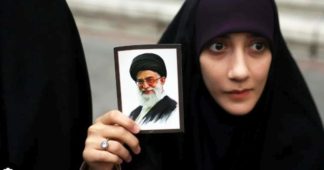
Iran’s supreme leader Ali Khamenei saw his nuclear strategy blow up in his face when an Israeli strike killed him on the first day of the war Jerusalem launched together with the United States against the Islamic Republic on February 28.
For decades, Khamenei had a policy of developing the ability to build a nuclear weapon, while holding off on actually doing so.
Khamenei’s threshold nuclear strategy was designed to pose a deterrent to US and Israeli attacks, while staying true to his 2005 religious ban on nuclear weapons.
The scheme didn’t save Iran from crippling US sanctions imposed by both Democratic and Republican administrations, but until last year’s 12-Day War, Tehran avoided paying a kinetic price.
Unmoved by the massive damage inflicted on his country’s three main nuclear sites last June, Khamenei directed his negotiators to continue insisting that Iran retain the right to enrich uranium in talks with the US last month.
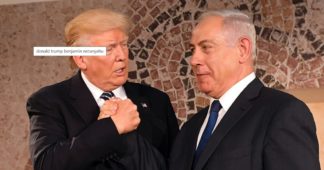
For US President Donald Trump, a deal with Iran offered the opportunity to block Tehran’s path to a nuclear weapon. But the sanctions relief Washington needed to give in exchange would have strengthened a destabilizing regime when it was at its weakest.
Untrusting of Iran’s intentions, Trump authorized the launch of Operation Epic Fury, rather than allow his top aides to convene for another round of talks.
The past two weeks have seen a relentless US-Israeli bombing campaign that has shaken the foundations of the entire region, with countries in the Gulf and beyond finding themselves the targets of much of Iran’s retaliation.
While the US and Israel are hoping this war strips Iran of the capability to obtain a nuclear weapon — let alone the ability to use it — a former top Iran analyst for the Israel Defense Forces argues that it may have an opposite effect, as the preemptive US-Israeli strikes once and for all proved Khamenei’s threshold strategy ineffective.
So now, Iran is left with two choices: abandon its nuclear program entirely or rush to a bomb.
Danny Citrinowicz, who headed the Iran branch of the Israeli Military Intelligence’s Research and Analysis Division, maintains that a threatened Iran is more likely to choose option two, particularly given that it is now led by Khamenei’s son Mojtaba, who is determined to avenge the deaths of his family members killed along with his father in the war’s opening strike.