SC/16315
11 March 2026
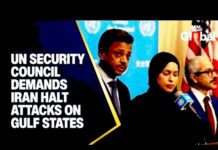
The Security Council today adopted a resolution condemning Iran’s “egregious attacks” against its regional neighbours amid rapidly spiraling violence in the Middle East, while rejecting a second draft tabled by the Russian Federation.
The 15-member Council adopted resolution 2817 (2026) (to be issued as S/RES/2817(2026)) by a vote of 13 in favour to none against, with 2 abstentions (China, Russian Federation). It comes as the war, which began with Israeli and United States airstrikes against Iran on 28 February, nears its two-week mark and has spread to nearly a dozen nations across the already fragile Middle East region.
By the terms of the resolution, the Council condemned “in the strongest terms” Iran’s attacks against Bahrain, Kuwait, Oman, Qatar, Saudi Arabia, the United Arab Emirates and Jordan and reiterated its strong support for those countries’ sovereignty, territorial integrity and political independence.
It specifically condemned Iran’s attacks against residential areas and civilian objects — demanding their immediate cessation — while also demanding that Tehran halt its threats, provocations and actions aimed at interfering with maritime trade, as well as support to proxy groups across the region.
“The message is clear”, said Bahrain’s representative, welcoming the Council’s adoption and the text’s sweeping global support. “The international community is resolute in rejecting these Iranian unjust, hostile acts that are targeting sovereign countries and that threaten the stability of their peoples.”
High Number of Co-Sponsors of Text Reflects World’s ‘Collective Conscience’
Noting that nearly 140 Member States co-sponsored the resolution, he said that high number reflects the world’s “collective conscience”. The Gulf region is a pillar of global security, trade and economic stability, he added, emphasizing that protecting the Middle East is therefore in the entire world’s interest.
“At this crucial moment, it is imperative to listen to the voices of the region,” said Denmark’s representative, condemning Iran’s attacks and demanding that they cease immediately. She pointed to the large number of delegations, across the Council and the wider UN membership, supporting the text. “Every day passing, we are witnessing a further destabilization of the already volatile and tense situation,” she said, echoing calls for maximum restraint, protection of civilians and respect for international law.
“This war, which poses grave risks to regional security, must end now,” said France’s representative. “Only respect for international law and diplomacy can ensure the lasting security and stability of the region.” Stressing that Tehran has vastly expanded the war in recent days, he declared: “Iran bears a heavy responsibility for the current escalation.” He added that France has long been concerned by Iran’s nuclear threats and its support for regional proxies.
“Iran shoots in all directions”, stressed the representative of the United States, Council President for March, explaining his vote in his national capacity. Nations that previously had serious disagreements with each other have now joined together and spoken with one voice. Bahrain itself, a victim of these attacks, drafted and led the negotiations on the text, which was supported by a record number of co-sponsors.
The representative of Liberia, also speaking for the Democratic Republic of the Congo and Somalia, said those countries voted in favour to reflect “our principled commitment to diplomacy, dialogue, de-escalation and respect for international law as the only viable path to peace and stability in the Middle East”. He also stressed that the Council must not endorse interpretations of Article 51 that expand beyond the “core principles” contained in the UN Charter or that “risk eroding longstanding constraints on the use of force”.
The representatives of the United Kingdom, Greece, Panama, Latvia and Colombia also noted that they voted in favour of the resolution.
Biased Text Doesn’t Give Full Picture; United States, Israel Must Cease Unauthorized Military Strikes Immediately
China’s representative, who abstained, pointed out that the United States and Israel launched military strikes without Council authorization and must cease their actions immediately. While stressing that the sovereignty, security and territorial integrity of Gulf Arab States must be fully respected, he cautioned that the resolution just adopted “does not fully reflect the root cause and overall picture of the conflict in a balanced manner”.
The representative of Pakistan, who voted in favour of the text, said he would also support a second draft to be tabled by the Russian Federation.
“To our deep regret, the resolution that just passed is expressed […] in a biased and one-sided tone,” said Moscow’s representative, prior to introducing his country’s separate text. Reading Bahrain’s resolution without context would lead one to believe that Tehran, with no provocation and out of pure malice, decided to strike targets across the region for no reason.
He said the need to protect civilians is also presented in the resolution in an extremely one-sided way — as if Israel and the United States had not killed men, women and children in Iran and cynically murdered the country’s supreme leader. “The Council’s adoption [of this text] could be interpreted by bad-faith actors, and first and foremost by those who started this war, to continue their acts of aggression against Iran,” he warned.
To those ends, he introduced a separate draft resolution, which he described as an “impartial document aimed at urgently de-escalating the situation”. The text is simple, direct and unequivocal, and intentionally does not name any parties to the conflict, he said.
Second Draft Presented by Russian Federation Rejected, Draws Mixed Reactions
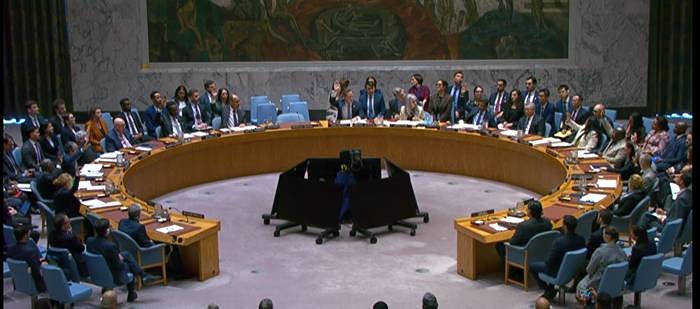
Voting a second time, the Council rejected Moscow’s draft resolution by a vote of 4 in favour (China, Pakistan, Russian Federation, Somalia) to 2 against (Latvia, United States), with 9 abstentions (Bahrain, Colombia, Democratic Republic of the Congo, Denmark, France, Greece, Liberia, Panama, United Kingdom).
“We’re deeply disappointed,” said the Russian Federation’s delegate, taking the floor again. Noting that many Council members’ positions are dictated purely by short-term political interests, bloc solidarity and “the fear that they might fall out of favour with their elder friends”, he added: “This is not even double standards […] we are living through the looking glass.”
China’s representative also expressed regret that Moscow’s draft resolution was not adopted, declaring: “This is a war that should not have happened, and a war that benefits no one.”
While welcoming the Russian Federation’s desire to contribute to responding to events in the region, Bahrain’s representative said that his delegation abstained from the vote “because that draft resolution adopts a general tone, which in no way reflects the dangerous military escalation currently besetting the region”.
“This draft resolution says nothing about the overwhelming responsibility borne by Iran in the current escalation, including its indiscriminate and unjustified attacks against its regional neighbors who posed no threat,” said France’s delegate, who also abstained. Despite its good intentions, the Russian text was not a viable basis for bringing the Council together and providing the response the circumstances demand, he said.
The representative of the United States said that “the Russian Federation knew it did not have the votes to adopt its resolution today, yet it insisted on proceeding to a vote”.
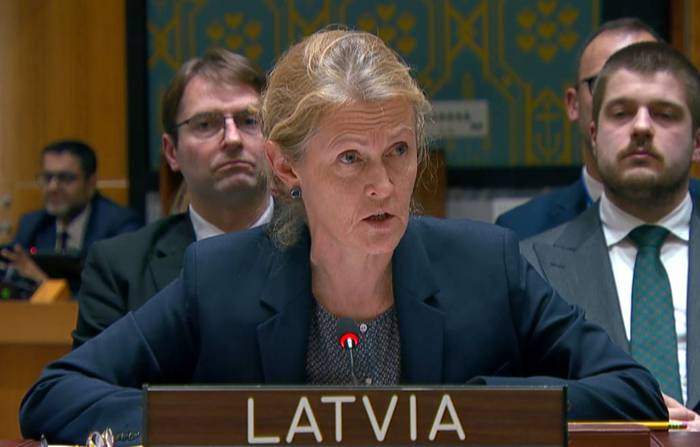
Latvia’s delegate, who voted against the Russian Federation’s proposed text, said it was tabled by a permanent member of the Council which has for years been using force against civilians and civilian infrastructure in a sovereign country. “Iran is now attacking [its neighbours] with the same weapons”, she stressed, describing Moscow’s text as a deeply “cynical” one.
“It is impossible to overlook the hypocrisy of Russia presenting itself here as a guardian of international peace and security,” agreed the representative of the United Kingdom.
Israel Welcomes Clear Condemnation of Iran’s Attacks, Iran Declares Manifest Injustice against His Country
Also addressing the Council today were the representatives of Israel and Iran.
The former, welcoming the Gulf States’ initiative to condemn Iran’s attacks, said the Council’s message is clear: “Targeting civilians is wrong, targeting cities is wrong, and Iran must stop.” Stressing that Iran used diplomacy as cover while it fortified its nuclear programme, he rejected Iran’s assertions that its nuclear programme is exclusively peaceful. “That is simply not true,” he said.
“Today’s adoption is a serious setback to the Council’s credibility and leaves a lasting stain on its record,” said Tehran’s delegate. The very State responsible for the brutal war of aggression against his country — the United States — sits in the Chamber as Council President, abusing his position while obstructing every effort to bring an end to the barbaric war. “Let me make it clear — this resolution is a manifest injustice against my country, the main victim of a clear act of aggression.”
In brief: Vote on 2 Draft Resolutions on Middle East Crisis
What happened: The 15-member Security Council adopted resolution 2817 (2026) condemning Iran’s missile and drone strikes on Gulf States, deepening divisions over the escalating Middle East crisis triggered by US–Israeli strikes on Iran.
The measure, presented by Bahrain on behalf of the Gulf Cooperation Council (GCC), passed with a 13–0 vote with China and the Russian Federation abstaining, demanding Tehran halt attacks on GCC members and Jordan. A rival Russian resolution calling for a general ceasefire and protection of civilians failed amid Western opposition.
Why it matters: the vote signals broad diplomatic backing for Gulf States while exposing sharp splits among major Powers over responsibility for the conflict.
Bottom line: The Council delivered a strong rebuke of Iran but failed to unite around a broader de-escalation plan.
(Summary generated with AI assistance based on UN coverage.)
A summary of today’s meeting will be available on our website.
 ©UN Web TV
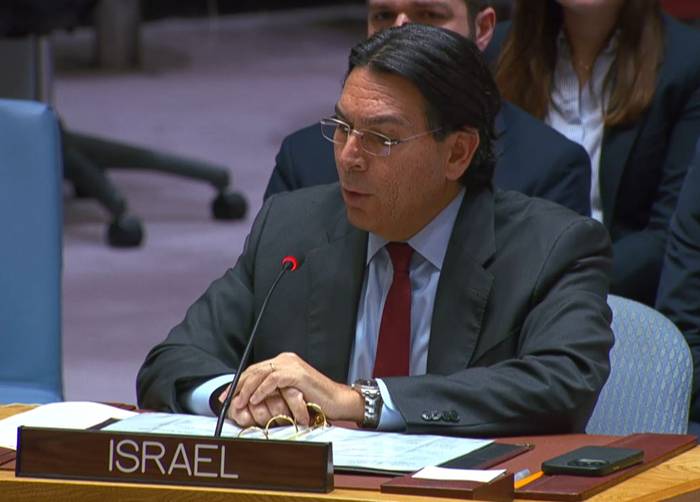
Danny Ben Yosef Danon (Israel), welcoming the Gulf States’ initiative to condemn Iran’s attacks, said that the Council’s message is clear: “Targeting civilians is wrong, targeting cities is wrong, and Iran must stop.”
He also pointed out that “what we are seeing today did not begin two weeks ago for Israel”, stating that Iran has spread violence across the region for 47 years.
Stressing that Iran used diplomacy as cover while it fortified its nuclear programme, he stated that “peaceful nuclear programmes do not hide critical facilities deep inside mountains”.
Iran’s representative tells the Council that his country’s nuclear programme is exclusively peaceful and that Tehran only targets military sites. However, he declared: “That is simply not true.”
 ©UN Web TV
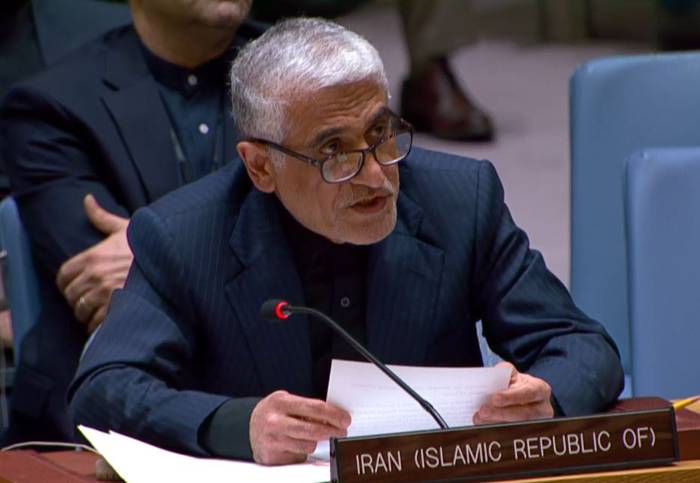
“Today’s adoption is a serious setback to the Council’s credibility and leaves a lasting stain on its record,” said Amir Saeid Iravani (Iran), expressing regret over the decision.
Such action represents a blatant misuse of the Security Council’s mandate in pursuit of the political agendas of certain members.
The very State responsible for the brutal war of aggression against his country — the United States — sits on the other side of this chamber as Council President, abusing its position while obstructing every effort to bring an end to this barbaric war against the Iranian people.
“Let me make it clear: This resolution is a manifest injustice against my country, the main victim of a clear act of aggression,” he said.
 ©UN Web TV
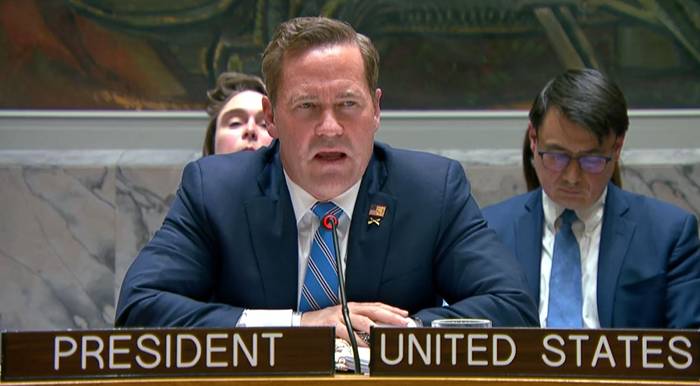
“The Russian Federation knew it did not have the votes to adopt its resolution today, yet it insisted on proceeding to a vote,” said Michael G. Waltz (United States).
Once again, that country is acting at the Council to protect its partner Iran, he added, rejecting its attempt to conflate lawful United States actions taken in line with Article 51 of the UN Charter.
 ©UN Web TV
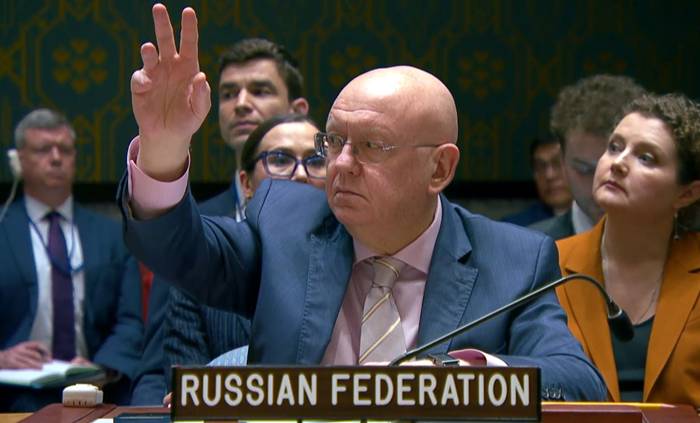
“We’re deeply disappointed”, said the Russian Federation’s delegate, noting that many Council members were not able to muster enough strength and wisdom to pass the text his country proposed.
“Their position is dictated purely by short-term political interests, bloc solidarity and the fear that they might fall out of favour with their elder friends.”
The Russian Federation’s draft contained nothing objectionable, he said, noting with alarm that his text only failed due to narrow geopolitical considerations. “This is not even double standards – this is surreal,” he stressed, adding: “We are living through the looking glass.”
 ©UN Web TV
Sanita Pavļuta-Deslandes (Latvia), who voted against the Russian Federation’s proposed text, said it was tabled by a permanent member of the Council which has for years been using force against civilians and civilian infrastructure against a sovereign country.
“Iran is now attacking [its neighbours] with the same weapons,” she stressed, describing Moscow’s text as a deeply “cynical” one.
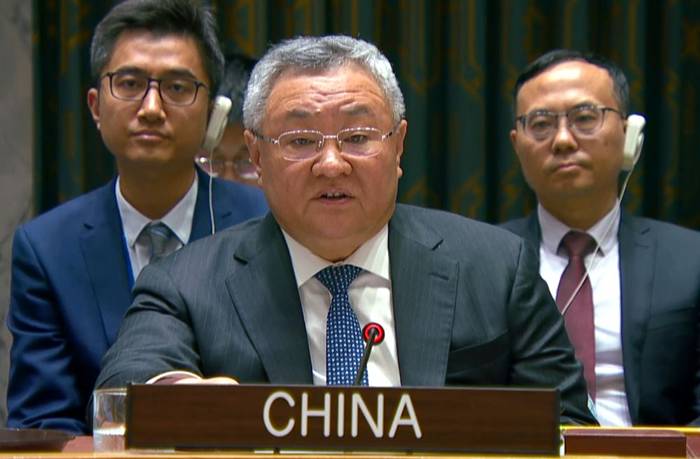 ©UN Web TVExpressing regret that the draft resolution was not adopted, Fu Cong (China) stressed: “This is a war that should not have happened, and a war that benefits no one.”
Council rejects Russian Federation-sponsored text by 4 in favour, 2 against, with 9 abstentions
©UN Web TV
The Council rejected resolution 2818 (2026) with 4 votes in favour (China, Pakistan, Russian Federation and Pakistan) to 2 against (Latvia and United States), with 9 abstentions (Bahrain, Colombia, Democratic Republic of the Congo, Denmark, France, Greece, Liberia, Panama and the United Kingdom).
It would have urged all parties to immediately stop their military activities and refrain from further escalation in the Middle East and beyond; condemn in the strongest terms all attacks against civilians and civilian infrastructure; and call for their protection, underscoring the obligations of all parties under international law, including international humanitarian law.
 ©UN Web TV
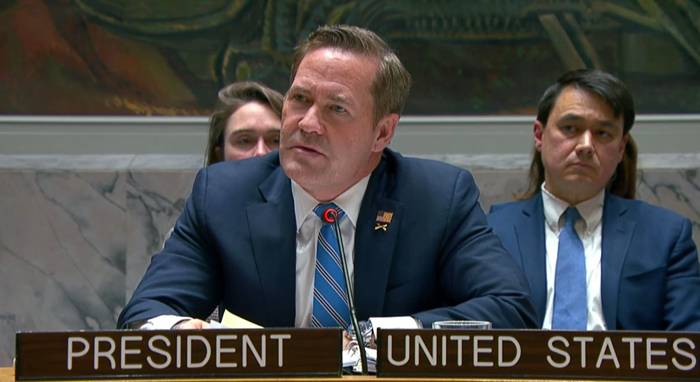
Michael G. Waltz (United States) said that the Council heard claims that all of Iran’s strikes have been against United States military bases or various types of military installation.
However, “Iran shoots in all directions”, he said, citing attacks on civilian structures. Nations that previously had serious disagreements have now joined together and spoken as one voice.
Bahrain itself, a victim of these attacks, drafted and led the negotiations on the text, which was supported by a record number of co-sponsors. “We read every one of them today so that the entire world could hear it,” he said.
©UN Web TV
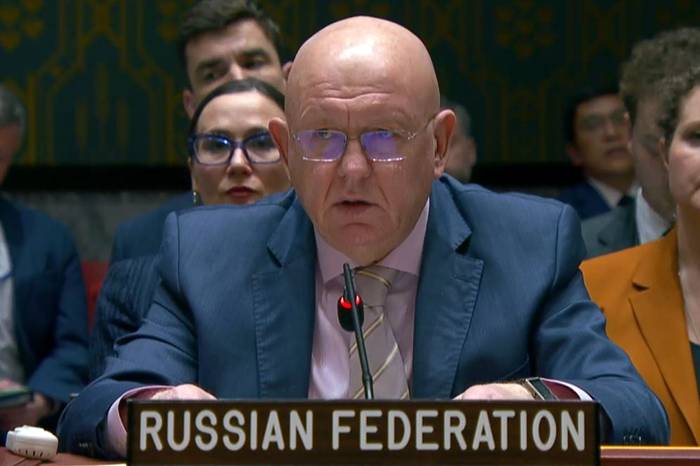
Vassily A. Nebenzia (Russian Federation) said reading that draft without context would lead one to believe that Tehran, with no provocation and out of pure malice, decided to strike targets across the region.
It is clear the United States is using its military positions across the Gulf region – including in Oman, Kuwait and Iraq – for aggressive and offensive purposes.
The need to protect civilians and civilian infrastructure is also presented in an extremely one-sided way, he said, as if Israel and the United States had not struck men, women and children in Iran and cynically murdered the country’s supreme leader.
“The sponsors of the draft suggested that we close our eyes to this unlawful action and aggression against Iran,” he emphasized, proposing that the Council instead use balanced language to condemn all strikes equally and demand that all parties refrain from acts that could lead to further provocation.
“The Council’s adoption [of this text] could be interpreted by bad-faith actors, and first and foremost by those who started this war, to continue their acts of aggression against Iran,” he warned.
.
We remind our readers that publication of articles on our site does not mean that we agree with what is written. Our policy is to publish anything which we consider of interest, so as to assist our readers in forming their opinions. Sometimes we even publish articles with which we totally disagree, since we believe it is important for our readers to be informed on as wide a spectrum of views as possible.
 Iran’s Khamenei Says US Attack Will Lead to ‘Regional War’
 Mideast Source to Haaretz: U.S. Drops Demand for…
 Iran Calls on China-Led SCO to Develop ‘Collective…
 Iran claims it is hitting only US military targets,…
 Iran condemns US attack on Venezuela as ‘blatant…
 Bahrain Faces Unrest and Regime Change Threats Amid…