


Simplicius
Oct 18, 2026
Last night Ukraine launched another large-scale attack on the St. Petersburg region, which according to reports was the largest of the war as it targeted multiple different enterprises, including oil and data center facilities.
The Ukrainian operation against Saint Petersburg, Russia, has been the largest in this war against this Russian city.
Three major targets were hit during this operation:
– The local oil terminal respectively the oil storage units
– The VKontakte Datacenter
– The local Ozon logistics hub
The biggest story surrounding the attack, however, is that once again Ukraine utilized NATO airspace to carry out the attack and, presumably, to bypass Russian air defenses.
Before we get into the details, let us first bring reminder of the last time this happened during the St. Petersburg International Economic Forum (SPIEF) in June of this year, which we covered in the following piece:
Ukraine’s SPIEF Attack Aims for Max Provocation, as Drones Witnessed Coming From Baltic Direction

Ukraine launched a major drone attack on Russia’s St. Petersburg to coincide with the annual St. Petersburg International Economic Forum (SPIEF). The purpose was obviously to humiliate Russia in front of its many international attendees, which included US State Department personnel and foreign dignitaries.
You’ll recall that we geolocated and triangulated the drone trajectories during that attack and concluded that based on the vantage point of the cameras, at least some of the drones which hit the St. Petersburg oil terminal were in fact coming from the westerly direction as follows:
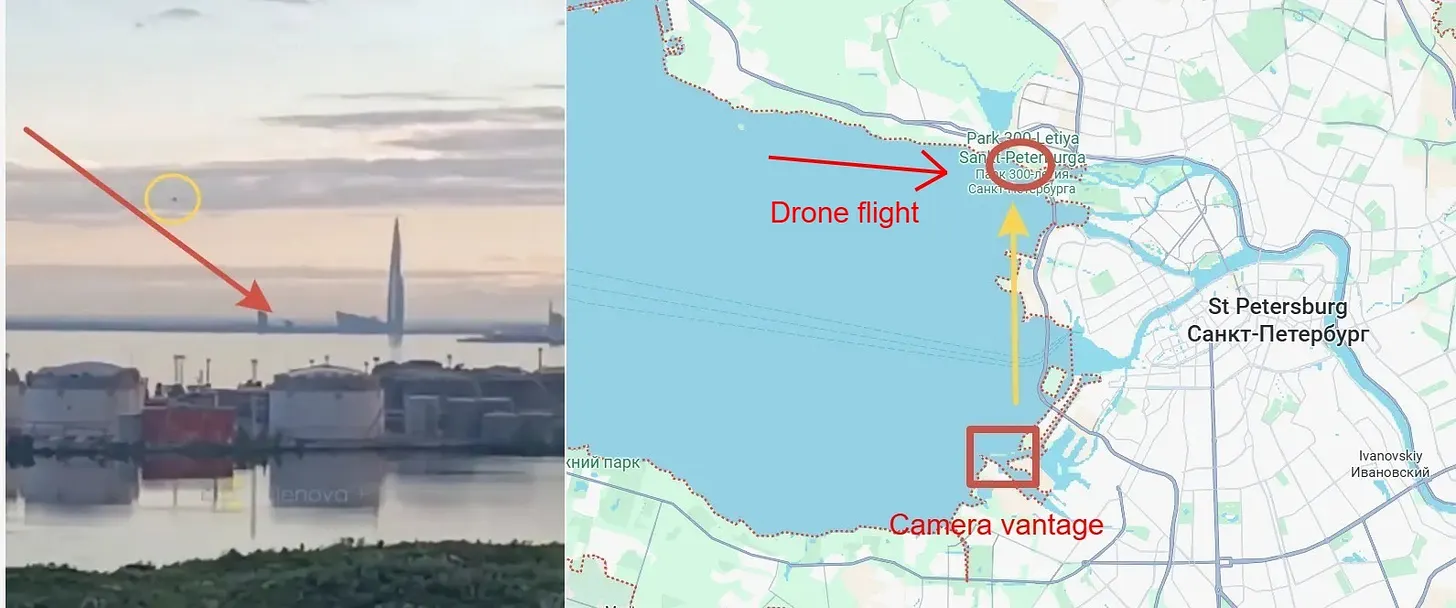
The article also included a video taken from a Russian boat that showed a Ukrainian drone skimming the Baltic Sea at an area we guessed to be near the border of Estonia.
But now, we have definitive confirmation from last night’s attacks: The Ukrainian Ministry of Foreign Affairs Spokesman admitted that Lithuanian airspace was utilized by Ukrainian drones, but blamed it on “Russian electronic warfare”:
The full statement:
We regret the incident that occurred this morning in Lithuanian airspace, which may have resulted from Russian electronic warfare diverting drones during an operation against legitimate military targets in Russia.
We apologise for any disruption, risks, and concern this may have caused.
We are committed to sharing all relevant information with our Lithuanian partners to establish the full circumstances of the incident. We will continue to work closely together to prevent similar incidents in the future.
We sincerely thank Lithuania, our ally, for supporting Ukraine in countering Russian aggression, which is the root case of the security threats in our region.
Some Russian channels have mapped the incident as follows, utilizing the air alerts and civil warnings that were issued in various central Lithuanian counties, as well as those in bordering regions of Latvia:
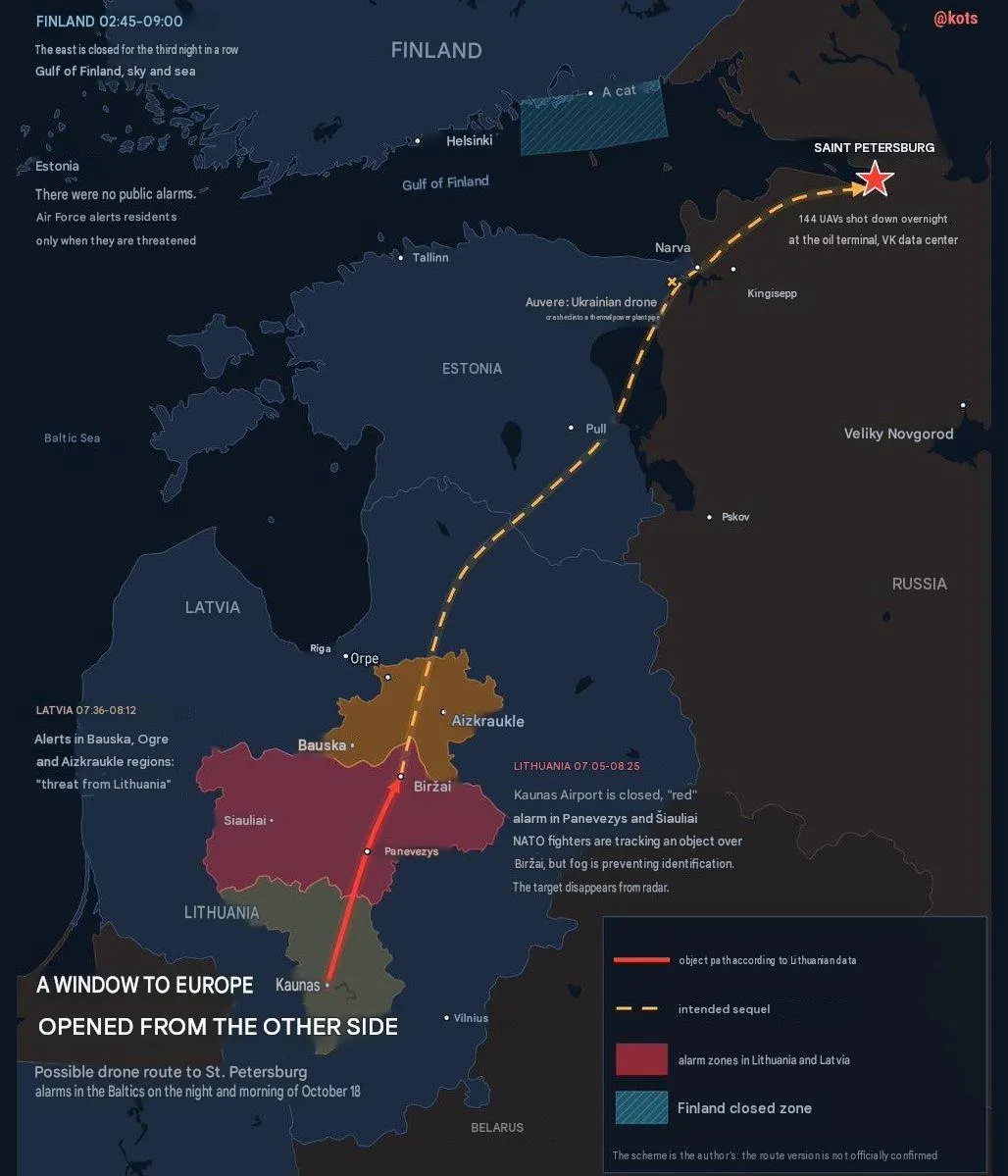
Speculation continues that the drones traveled through Russian territory, skirting around Belarus, and then swung west into Latvian and Estonian territory for the final stretch of the mission. But that makes little sense, and would not explain why Lithuania had air alerts, which is quite far from Russian borders.
Recall my logical critique from the earlier article: If Russian electronic warfare was so inimitable as to be able to thwart the Ukrainian drones to somehow veer all the way into Lithuania as claimed by the Ukrainian spokesman—a country that does not even remotely border Russia (not counting Kaliningrad)—then why wouldn’t the same all-powerful electronic warfare systems be able to keep all drones from hitting their targets in St. Petersburg?
As far as we know, most of the targets were in fact hit. Why would Russia have extremely effective electronic warfare systems positioned in the unpopulated hinterlands east of Belarus, yet have none of the same “powerful” systems anywhere near St. Petersburg which could have easily deflected the Ukrainian drones into the Baltic Sea just as they so easily deflected them into Lithuania according to these claims?
In short: The EW warfare explanation is an obvious fraud.
But in a shocking plot twist, a Reuters report quoted the Lithuanian Defense Minister Robertas Kaunas as casually revealing that the drones in fact “came from Poland”:
Continue reading at simplicius76.substack.com
We remind our readers that publication of articles on our site does not mean that we agree with what is written. Our policy is to publish anything which we consider of interest, so as to assist our readers in forming their opinions. Sometimes we even publish articles with which we totally disagree, since we believe it is important for our readers to be informed on as wide a spectrum of views as possible.