Study also says Balkan levels are often higher than in Beijing – and sometimes among the highest in the world
By Gary Fuller
23 Jan 2026
When we think of the world’s most polluted cities, images of Delhi or Beijing come to mind, but new data has revealed acute pollution problems close to the heart of Europe.
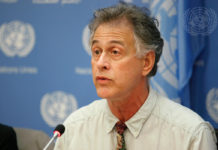
Prof Andre Prevot, of the Paul Scherrer Institute (PSI) in Switzerland, explained: “In winter, the particle pollution in the Balkans is the highest in Europe. Particle pollution levels are often higher than in Beijing and on some days they are among the highest in the world. Sulphur dioxide in winter can be over 30 times greater than what we normally see in western Europe.”
About 3,300 people are estimated to die early each year from particle pollution in Bosnia and Herzegovina.
It is hard to understand a city’s air pollution from making measurements in one place. Instead, the team from the PSI packed state-of the-art air pollution sensors into an adapted van, with sample pipes on the roof, and drove circuits of Sarajevo during wintertime. Each circuit took about 90 minutes, with the team driving up to six circuits in a day.
Michael Bauer, of the PSI, said: “One of the hardest parts of the study was spending so much time in traffic, driving in the narrow streets up and down the hills. Some evenings were visibly smoggy in the west. There were clear odours of wood and coal smoke in the residential areas, and also wafts of grilling, especially of ćevapi, in the city centre.”
The team looked at part of the particle pollution mixture but even this exceeded the World Health Organization’s daily guideline for 66% of the time, and often it was more than eight times higher.
The worst polluted places were residential areas where air pollution was dominated by home heating, including wood, coal and rubbish burning, along with high amounts of cancer-causing polycyclic aromatic hydrocarbons.
Continue reading at www.theguardian.com
We remind our readers that publication of articles on our site does not mean that we agree with what is written. Our policy is to publish anything which we consider of interest, so as to assist our readers in forming their opinions. Sometimes we even publish articles with which we totally disagree, since we believe it is important for our readers to be informed on as wide a spectrum of views as possible.
 The world’s 100 worst polluted cities are in Asia —…
 Gaza Strip: War Causes Large Emissions of Polluting Gases
 Climate Change brings Sahara to Greece!
 As Deadline Looms, Advocates Call Plastics Treaty…
 Big oil firms knew of dire effects of fossil fuels…
 Climate change target of 2C is ‘dead’, says renowned…